“…that we may perfectly love thee, and worthily magnify thy holy Name; through Christ our Lord. Amen.”
The brilliance of Cranmer’s “Collect for Purity” reaches its magnificent summit in the final clauses of the prayer, moving the worshipper from a posture of desperate confession into a breath-taking vision of holy devotion. We began by standing completely exposed before the piercing gaze of a God from whom no secrets are hid, which rightly drove us to plead for the cleansing breath of the Holy Spirit to sweep through the cluttered corridors of our minds. Now, we arrive at the profound purpose behind this divine washing, discovering that God does not purify our hearts simply to leave them empty, but rather to fill them with a burning, undivided affection so that we may perfectly love him and worthily magnify His holy Name. This beautiful progression mirrors the very shape of the Gospel itself, demonstrating that conviction and cleansing are never the final destination of the Christian life, but are instead the neccessary preparations for entering into the joyful presence of our Creator.
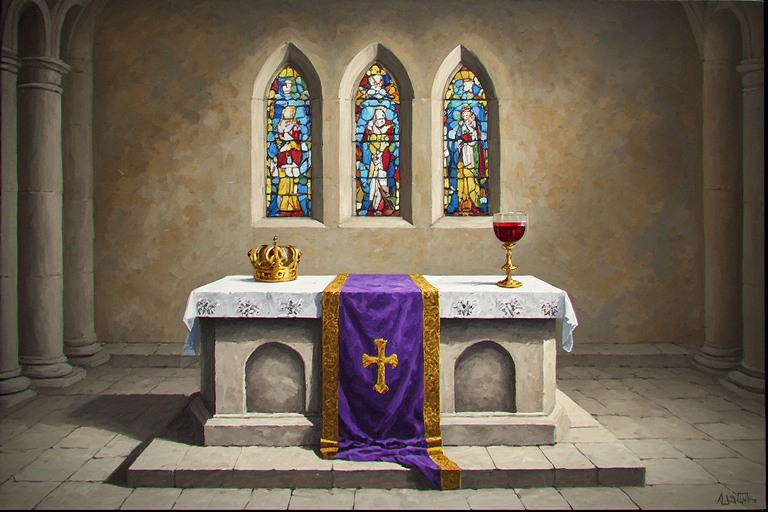
When we ask God for the grace to perfectly love him, we often stumble over the demanding weight of the word perfect, viewing it through the harsh lens of modern performance metrics where any slight failure results in immediate disqualification. However, in the biblical vernacular, perfection does not imply a robotic, sinless existence on this side of eternity, but rather speaks of a mature, wholehearted devotion that is no longer hopelessly divided between the Kingdom of Heaven and the glittering distractions of this passing world. We are asking for the spiritual capacity to fufil the great commandment found in Deuteronomy 6:5, where we are instructed to love the Lord our God with all our heart and with all our soul and with all our might (ESV). Because our natural affections are so easily hijacked by lesser things, we must rely upon the ongoing work of the Spirit to cultivate a love within us that casts out fear, as the Apostle John describes in 1 John 4:18 (ESV). It is a plea for God to gather up all the scattered fragments of our fractured attention and bind them together into a single, blazing focus upon his goodness.
This internal furnace of this perfect love must inevitably radiate outward, which is why the Collect immediately transitions into the petition that we might worthily magnify His holy Name. To magnify something is not to make it objectively larger, for we cannot possibly add a single ounce of glory to the sovereign Lord of the universe, but rather it is to make His inherent greatness clearly visible to a watching world. We are echoing the joyful invitation of Psalm 34:3 to magnify the Lord together and exalt His name (ESV), recognising that true worship extends far beyond the hymns we sing in the sanctuary on a Sunday morning. When our hearts are genuinely captivated by the love of God, our most mundane daily activities are radically transformed into a continuous liturgy of praise, answering the apostolic command in Colossians 3:17 that whatever we do in word or deed, we must do everything in the name of the Lord Jesus (ESV).
Crucially, Cranmer grounds this entire lofty aspiration in the final, anchoring phrase “through Christ our Lord”, cementing the Reformed understanding that we have absolutely no access to the Father apart from the sole mediation of the Son. We cannot perfectly love God or worthily magnify His Name through our own sheer willpower or moral bootstrapping, for our best religious efforts remain entirely insufficient to bridge the gap between heaven and earth. We are entirely dependent upon the One who has been given the name that is above every name, as Paul so beautifully declares in Philippians 2:9 (ESV), knowing that Jesus perfectly loved the Father and worthily magnified His Name on our behalf.
As you step out of the church doors and back into the chaotic demands of your working week, you can take immense comfort in the fact that your stumbling, imperfect attempts at worship are caught up by your Saviour, washed clean by his blood, and presented to the Father as a beautiful and entirely acceptable sacrifice of praise.
0 Comments