Overview:
Brace yourselves, this is a long read…
During my discernment process – a doubt was thrust in my mind (as have many in attempt to derail me – we know your ways Satan) – namely – why did God require animals to be killed as a sacrifice for sin – the objectors question (which I feel is fair to be honest) is “if God is the creator, couldn’t he have made a system whereby death and pain wasn’t required to forgive us? He sets the rules no?”…
…the phrasing of the question instantly makes me recoil based on the below words from the Bible:
“Woe to him who strives with him who formed him, a pot among earthen pots! Does the clay say to him who forms it, ‘What are you making?’ or ‘Your work has no handles’?” (English Standard Version – ESV).
When we look at the world, its majesty, beauty, exceptionally engineered for our life – we have soooo much to thank God for; but we can use objections such as the above question to throw out the baby with the bathwater per se.
Brothers/Sisters, at the end of 2025 I was guilty of a wobble in faith recently which upon reflection was likely an attack from the dark side (as Titus One Nine ministries is growing FAST – and the Anglican Church Traditional movement wish to work with us towards being ordained maybe next year). The thoughts that have allowed to build a nest in my mind recently are to the effect “do I really want this?”… “what if I’ve got it all wrong?”…and “why would God do XYZ (such as the question of this article). this is what Satan did to eve, made her doubt God. So with any doubt/temptation – do what Jesus did when challenged 3 times by Satan, use the bible to defend.
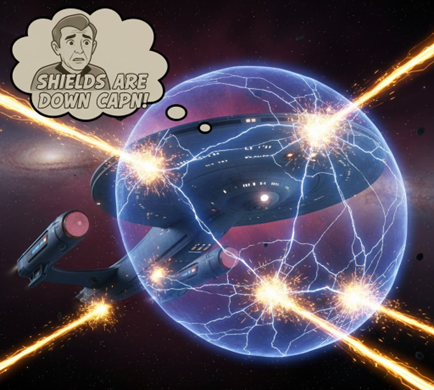
Now first of all my shields have been woefully down – prayer life is poor at best, and since my informal departure from the CofE I hadn’t prior Christmas been for Mass/Eucharist for weeks (which is a LOOONNG time for me).
The number “66” keeps showing up in my life lately – I mean, everywhere! Whenever I glance at my mobile phone it has 66% battery left; when I look at our dehumidifier randomly in the hall It reads 66% humidity (I think that’s what its for) etc etc – many sceptics (and its good to be sceptical) will say “your looking for the number subconsciously” – I’m really not. Why 66? – a quick internet search came up with this:
- Isaiah 66: Describes the peaceful, glorious Millennial Kingdom where Christ rules, symbolizing ultimate divine fulfilment and peace on Earth.
- 66 Books: The total number of books in the Protestant Bible, representing the complete word of God. “read the bible more David I hear God screaming!”
- Judah’s King Manasseh, who ruled from 696 to 642 B.C., dies at the age of 66….King Manasseh has always bee one of my favourite stories in the Bible and here he is as 66 – I did a mini sermon last year on him and its message to us. View it here
- The number 6 & Perfection: Six often relates to humanity (created on the sixth day), and 66 amplifies this, pointing towards God’s perfect plan for humanity, often involving spiritual completion or overcoming earthly struggles.
- Parshah Vayelech: In Judaism, 66 is the numerical value (Gematria) of “Vayelech” (וַיֵּלֶךְ), the first word of a Torah portion, signifying a journey or transition.
This was a useful link for me on the interweb here: https://www.biblestudy.org/bibleref/meaning-of-numbers-in-bible/66.html
Anyway, I digress – when I come to a question involving faith/theology etc I write the questions I want answering down (or type them up) – then search the scriptures for an answer. Continue reading if you wish to join me in my study today:
- Why did God require animal blood sacrifice?
- What was the sacrifice, what and how?
And I’m going to throw a curve ball extra couple of questions in here slightly (actually largely) off topic but I’m going to do so anyway:
- Why has God created a world which now has so much pain and suffering in?…
- And, is the very presence of evil and suffering as signpost to evidence that we have a malevolent creator who has placed us into existence for some reason (a very cathar belief which I see is gaining ground again by many on YouTube and the many “truth” conspiracy movements of late tying it in with the matrix and us humans being trapped etc…
…now many who know me may be shouting/thinking – “oh come on, that’s such a basic question – how far are you in your faith journey, and your still pondering that?!”…well you know what, yes, in that moment I was – never stop searching, never stop seeking, ask and the answer will be given to you…sound familiar? Plus, it’s in my nature to question and study other world views etc which has (as I look back in time on the path I have travelled) GREATLY assisted me in apologetics to almost allow my mind to really ponder these questions and indeed other faiths/views*. Also – go and read the book of Ecclesiastes, written by Solomon, the wisest man to have ever existed the Bible says (which I doubt because he had hundreds of wives – come on Solomon, what were you doing lad, ones enough surely!), wrote in that book in the Bible his questioning and musings on all the state of earth and mankind. It teaches towards the conclusion of the text that one has to eventually make a decision on what he/she knows (Ecclesiastes 12:12) and we must discern what God’s truth and will is (Ecclesiastes 12:13)…we may feel like we get “ta da” moments, but sometimes those moments need to be questioned again if there were cracks that need filling in to strengthen our foundational knowledge.
And then, when I feel that my mind has drifted ever so slightly excited by another view – I return to my foundation in Jesus and then feel guilty…there it is again – the dark side wants us to feel bad/ unworthy saying “you’ve done it this time, no need to start over, just give up, God won’t want you with all your doubts and questions…doubter!”…Yeah, well God loves us all, get behind me Satan. How dare he use our questioning mind against us.
Ecclesiastes 7:23-25 (New International Version):
23 All this I tested by wisdom and I said,
“I am determined to be wise”—
but this was beyond me.
24 Whatever exists is far off and most profound—
who can discover it?
25 So I turned my mind to understand,
to investigate and to search out wisdom and the scheme of things
and to understand the stupidity of wickedness
and the madness of folly.
* The Catechism of the Catholic Church puts it beautifully about the views on life in other faiths around the world which I have come to echo…
CCC843 The Catholic Church recognizes in other religions that search, among shadows and images, for the God who is unknown yet near since he gives life and breath and all things and wants all men to be saved. Thus, the Church considers all goodness and truth found in these religions as “a preparation for the Gospel and given by him who enlightens all men that they may at length have life.” This article was pretty good too in this study.
So back to our bible study:
- Why did God require animal blood sacrifice?
- What was the sacrifice, what and how?
- Why has God created a world which now has so much pain and suffering in?
- And, is the very presence of evil and suffering as signpost to evidence that we have a malevolent creator who has placed us into existence for some reason.
But first I’m pouring a glass of wine…
…ok, right I’m back. Let’s go.
Why did God require animal blood sacrifice?
A good video to start this question is this one…
Firstly, the bible says very clearly this wasn’t the plan, God created the world PERFECT. No pain no suffering, all things made good…AND the bible says in the end Gods will (no pain and death etc), will be done on earth as it is in heaven and that the former things (what we live in now) will be a thing of the past, a bad memory…or maybe more accurately; a hard lesson on where free will can take us, when we as humans, go it alone without God. (I nearly asked AI to make this paragraph more eloquent and clearer and cohesive, but I’ve decided to leave it).
The first animal sacrifice is apparently when God himself covered Adam and Eve who suddenly felt naked in the garden. It is said God covered their nakedness with garments of skin…where else could the skin come from if not from a killed animal? He covered over their perceived sin. Its one small verse in Genesis 3:21 with a BIG first push of the dominos which is still tumbling now…innocent animals have suffered because of Adam and Eve’s (humanities) sin.
I recline back at this point with my glass of wine – pondering this – innocent animals have suffered because of Adam and Eve’s (humanities) sin.
The next thing I can find in the Bible about animal sacrifice is the account of Cain and Abel where the two brothers bring a sacrifice offering to God – Cane brings God and offering of fruit, and Abel (a shepherd) brings God an offering of a dead “firstling” (a baby lamb I assume) its portions of fat.
Now God had regard for Abel’s offering of a lamb, but Cain’s offering really cheesed God off! It reads in my Bible (NRSV Anglicised) God had “no regard for Cain’s offering”…why? If I’m honest, at this stage, I’m not 100% sure as the text in Genesis doesn’t seem to explain the “why” directly. But lets carry on and see where it takes us…
So after this event, Cain is furious, God warns him of His fury, Cain doesn’t listen and then commits the first recorded murder on earth – he kills his brother Abel.
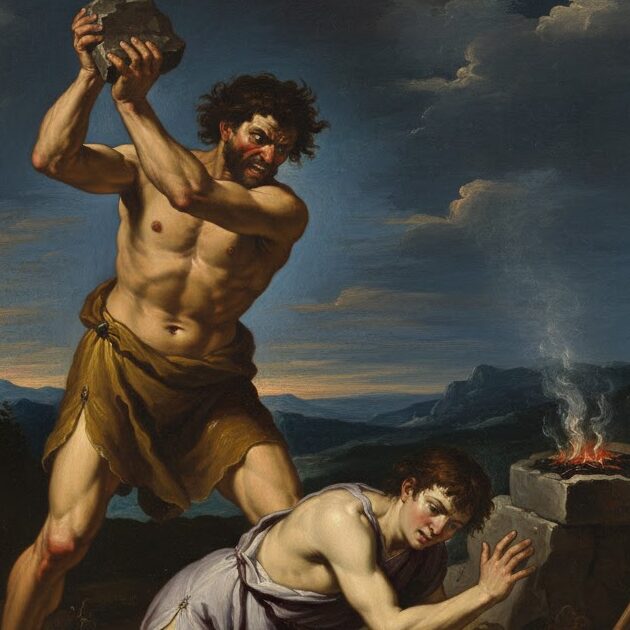
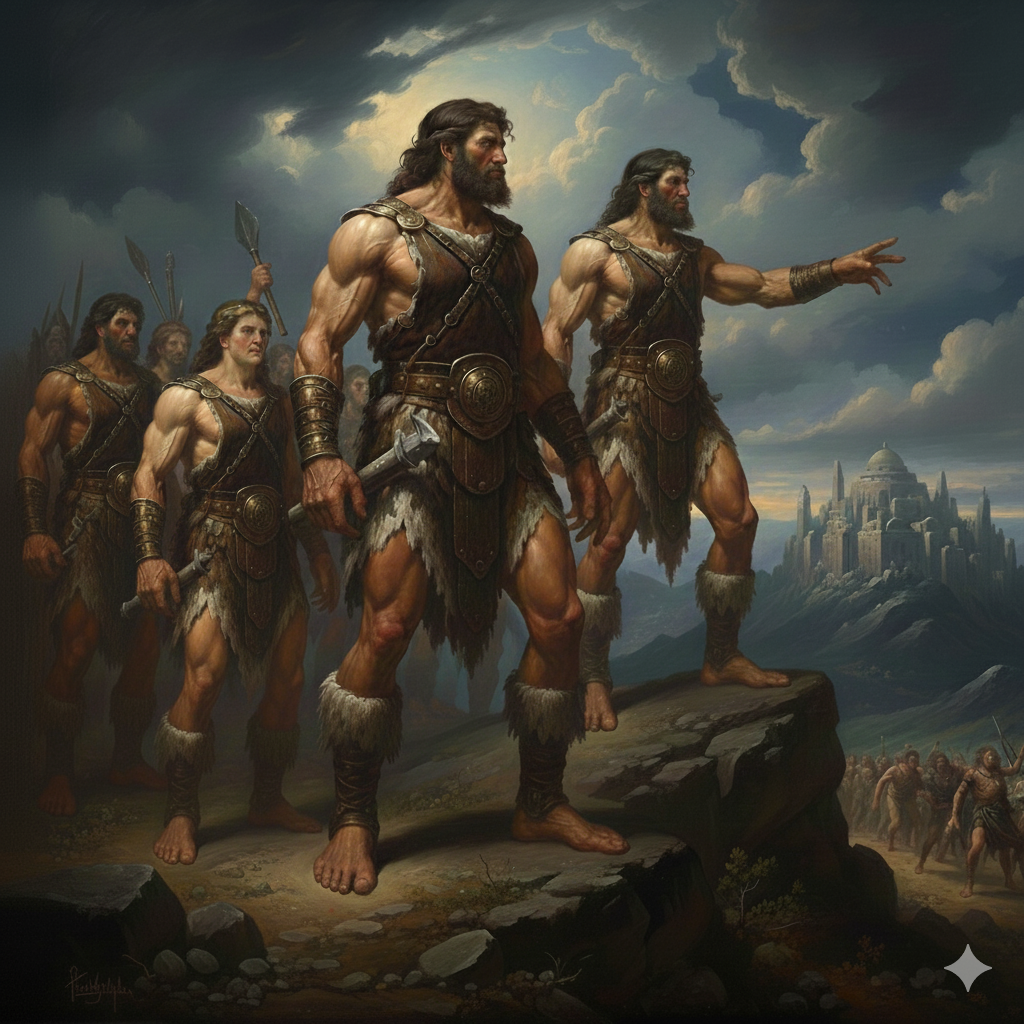
Now God is angry by Cain’s actions here and in one sense punishes him, and in another sense protects him (you’ll really have to go and read Genesis chapter 4at this point). But ultimately Cain is cast away (with a “mark” upon him – whatever that is. I know from memory it is noted in the writings of Anne Catherine Emmerichwhat this might have been but I’m definitely not getting into that now) and then resides in the land of Nod – don’t laugh. Civilisation is sad to begin and we’re now in the run up of humanities plunge into a very dire period of time of evil and pollution (apparently) of our DNA because fallen angels are said to have entered our realm and copulate with the women of earth, this in turn creates the Nephilim race which appear to be human/angel hybrids…
Figure 1 – I asked AI gemini google to make an image of the Nephilim – despite numerous attempts it wouldn’t make it an accurate image whereby showing the characters with 6 fingers and 6 toes each
Another pause for wine…stone me, what’s all this about…
Oh…and if you want to digress MASSIVELY into the subject of Nephilim – blow your mind with this video.
At this point I’m getting weary – but come on, lets get this done…
So the Nephilim area round and God is heard saying he was sorry he made mankind and it grieved his heart…now it might be the wine speaking at this point but this nearly brought me to tears writing this bit. The thought of our Creator, our spiritual Dad, upset that it heart his heart…this is so deep, and yet so easily scanned over if we don’t pause for a moment…God, our creator, Yahweh, or Jehovah was grieved in his heart that he created man. Gods ways are above our ways of course and his thoughts higher than our thoughts…BUT…the text taken literally suggests God didn’t want things on earth like this…I can now hear the sceptic asking – “but he’s god, he writes the rules, why did he write them in such a way”…clay pot complaining to the maker is that. But to be fair, the bible reads God “was sorry” he made mankind – to be sorry suggests a lack of knowledge et would pan out this way BUT that cant be true because the bible is very clear God is all knowing…STOP…all knowing of what? Past – yes, Future-??? Probably yes, as the end times are predicted, Jesus was prophesied so clearly, BUT what if God BECAUSE of free will pauses his knowledge OF ALL THINGS and our choices BECAUSE of free will?
Lets zoom forwards a few thousands years quickly to emphasize something ref this – Mary, Jesus Mum, said yes to God when she was met by the angel Gabriel – she said:
“Behold the handmaid of the Lord: Be it done unto me according to Thy word”.
NOW then (as they say in Yorkshire – truly they do say this a lot, pick up the phone and say “now then” that’s a regular thing in Yorkshire).
Mary saying “yes” to God – was it optional?
If you feel the answer is no – then you hold to the Calvinist view…
If you feel the answer is yes – you hold to an Armenian view.
I say that Mary said yes under free will and under no duress…her free will, making her Yes/Fiat something God could work with. She became the 2nd Eve.
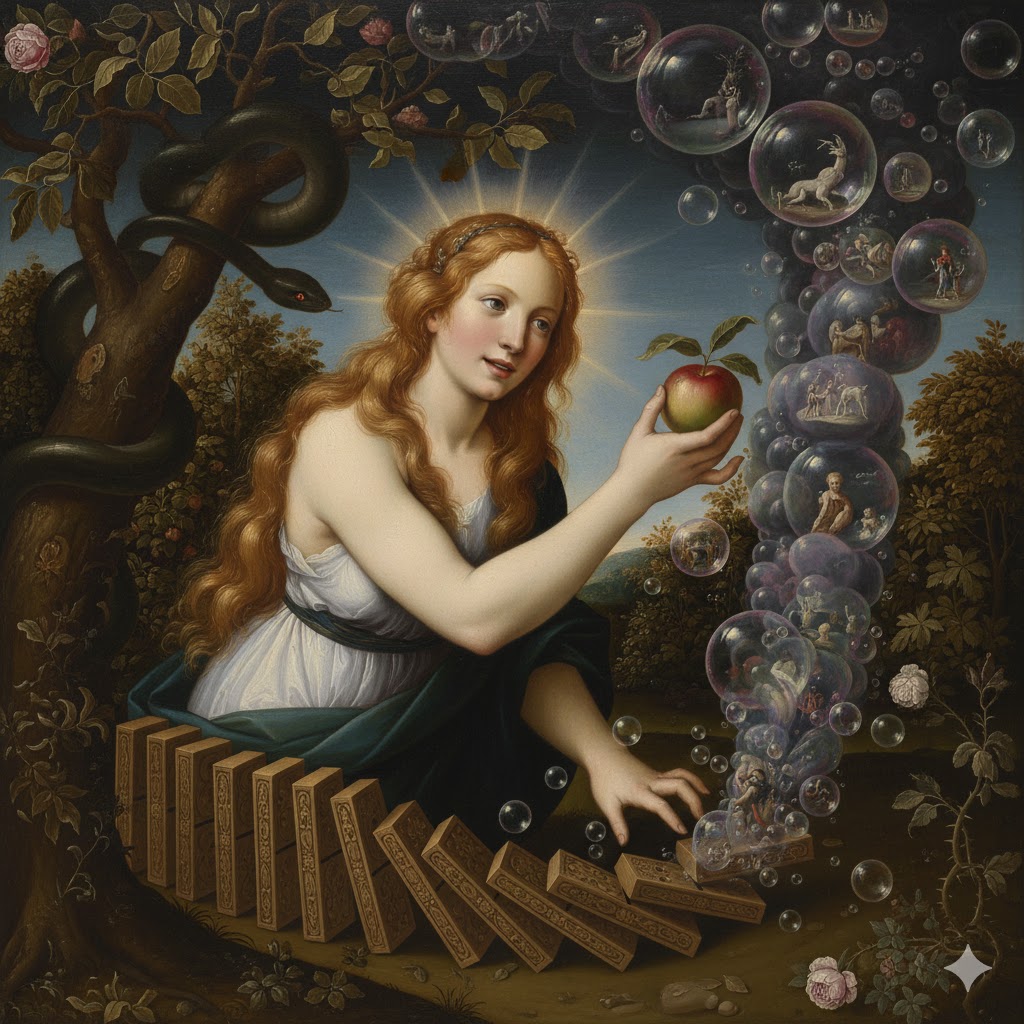
But what has this got to do with God feeling regret and being sorry he made mankind in his heart? Well, I feel, God really is holding out for us to do the right thing, and when we don’t it really does emphasise our use of free will and hurts god to the core because he knows its not the best thing for us – God knows the best things for us! He created us free from the knowledge of good and evil, blissfully unaware of the cliff edge of reality this would plunge us into…imagine it as a film take where Eve reaches out to the apple and cut to another scene of all of humanities evil this would trigger to run through over the next thousands of years…
Ok so far – Adam and Eve, Cain and Abel, Cain’s offering wasn’t accepted and Abel’s was. Civilisations grew, Nephilim were on the earth then (and afterwards)…then the flood.
Now were there blood sacrifices offered in the time leading up to Noah and the great flood? Probably, Abel had sacrificed a lamb, which was approved by God – likely because it echoed Abel’s Faith and echoed what god was going to do in Jesus, His Son – our Lamb of God. However, in those times there weren’t many folk with Faith in God it would appear except Noah.
Noah builds the Ark (probably over 55-75 yrs), the flood comes, lasts for 150+ days, then the ark lands on the mountains of Ararat. They claim it has been found…PLUS a side note – did you know ship building dimensions are still today in line with the Ark’s biblical description length vs width ratios…cool hey.
Anyway, back to our study…so the ark came to rest on dry land and Noahs immediate action was to build an altar to God and offer up every clean animal and bird as a burnt sacrifice. God “smelt” the pleasing odour and the Lord said in his heart “I will never again destroy every living creature as I have done” and then the world was changed at that moment It would appear; Noah and his family were tasked at repopulating the earth; animals were given fear of humans (implying they didn’t have the instinct prior the flood) AND animals were now considered food – the world prior the flood was meant to be vegetarian (and this is the will of God in Eden) – but after the flood this rule changed…BUT, God placed one prohibition – we were not meant to eat flesh with its life, that is, its blood. So blood pudding is not biblical – blood transfusions? Not in my opinion as the “no blood rule” was carried over in the new testament from how I read it. Fair play to the Jehovah Witnesses – they appear correct in this point. This is not medical advice etc etc and all that.
Blood was, and is special, it is a creature’s “lifeblood”, and the Bible gives us our first Rosetta stone in answering our 1st question (Why did God require animal blood sacrifice?):
Genesis 9:4-6 – New Revised Standard Version, Anglicised –
4 Only, you shall not eat flesh with its life, that is, its blood. 5 For your own lifeblood I will surely require a reckoning: from every animal I will require it and from human beings, each one for the blood of another, I will require a reckoning for human life.
6 Whoever sheds the blood of a human,
by a human shall that person’s blood be shed;
for in his own image
God made humankind.
The “reckoning” for lifeblood requires accountability from both animals like an ox that must be killed for goring a person (Exodus 21:28) to uphold the protection of life and, more crucially, from human beings, where the principle of capital punishment is established for murder, mandating that one who sheds human blood shall have their blood shed, because humanity is created in the image of God.
So, we live in post flood times, a new world in a sense, not the originally built one, animals are food for us and they in turn have been made fearful of us (seems fair).
All of this after the flood and the new rules and promise was sealed as a promise/covenant in the sign of rainbow – the Noahic covenant – so every time I see a rainbow flag these days that is what that means to me, it’s just been hijacked these days to mean something else.
Then the next chapter on earth was the tower of Babel, where at that point only a single language existed amongst mankind and our apparent force as one world power as humans was an issue at that time so God spoke amongst the heavenly council and said:
Genesis 11:6-7 – New Revised Standard Version, Anglicised:
6 And the Lord said, ‘Look, they are one people, and they have all one language; and this is only the beginning of what they will do; nothing that they propose to do will now be impossible for them. 7 Come, let us go down, and confuse their language there, so that they will not understand one another’s speech.’
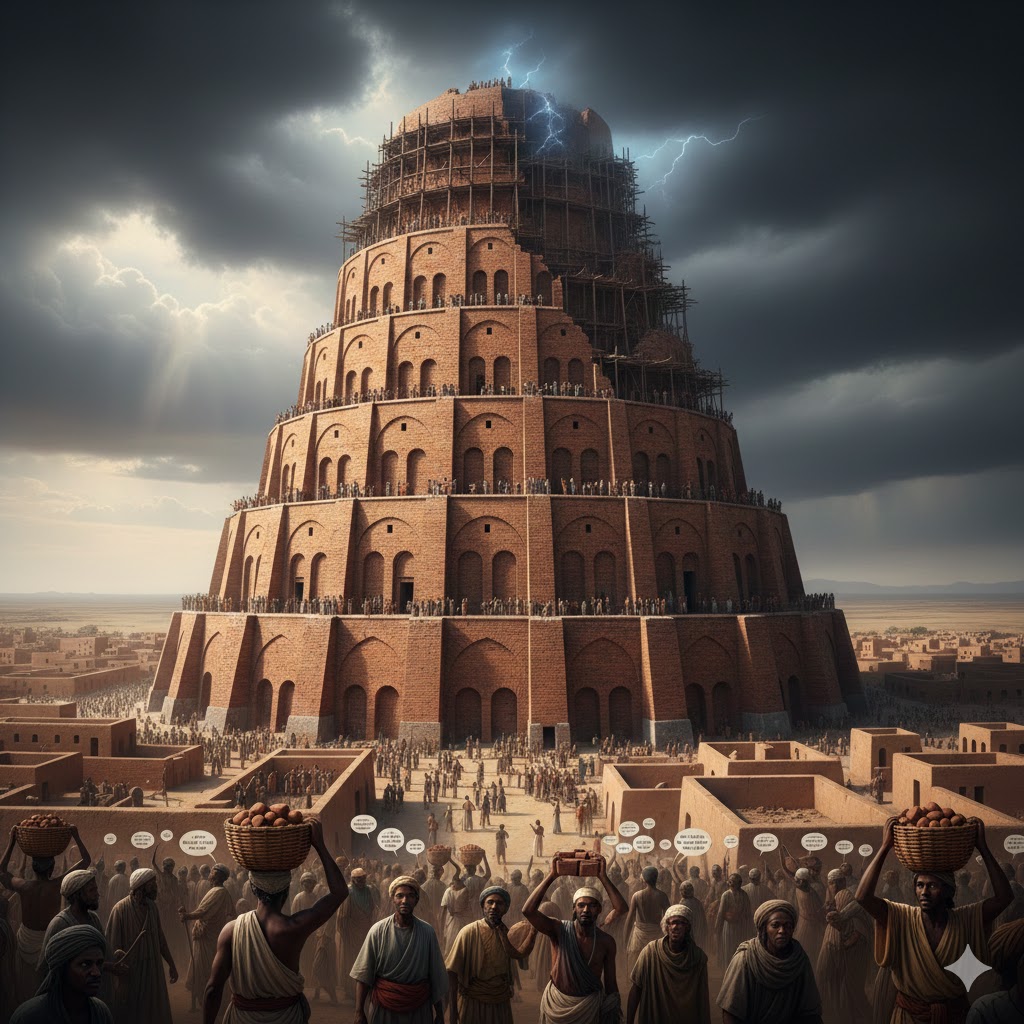
After the Tower of Babel there are a handful of verses in Genesis after this which detail or allude to animal sacrifice as a custom amongst believers in the Old Testament:
Genesis 15:10, 17: Abraham’s covenant ceremony, involving the splitting of animals and the smoking fire pot passing between the pieces.
Genesis 22: The binding of Isaac (Akedah), where God provides a ram as a substitute sacrifice. (Massive echo here of God testing his faithful to see if they would go as far as sacrifice their own son to honour God…now Abraham did not need to in the end and this account is a huge echo of Jesus’ on the cross).
Genesis 26:25: Isaac builds an altar at Beersheba.
Genesis 33:20: Jacob builds an altar and calls it El-Elohe-Israel (God, the God of Israel).
Genesis 35:1, 7: God instructs Jacob to build an altar at Bethel.
Now lets roll forwards to the Book of Exodus where the game changes…
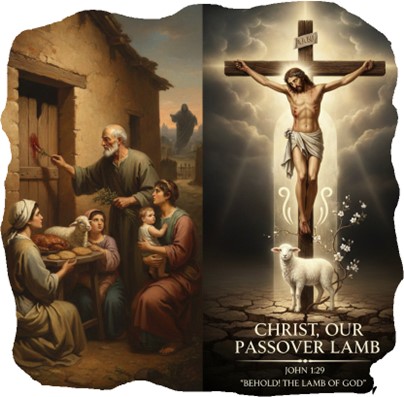
The Passover sacrifice, instituted in Exodus 12, required the blood of an unblemished lamb to be applied to the doorposts of Israelite homes, serving as a sign for the Lord to “pass over” those households, sparing the firstborn from the final plague in Egypt. This act of substitutionary sacrifice, where an innocent life was given to redeem the firstborn from death, foreshadowed the ultimate act of redemption in the New Testament. The Apostle Paul explicitly connects the two, stating, “For Christ, our Passover lamb, has been sacrificed” (1 Corinthians 5:7). Jesus, viewed as the sinless, “Lamb of God” (John 1:29), fulfilled the Old Testament typology by willingly shedding his blood on the cross at the time of the Passover feast, providing not just temporary physical deliverance, but eternal deliverance from the bondage of sin and the certainty of God’s final judgment for all who take refuge in his sacrifice.
Then in Exodus, the system of sacrifices was being formalized, establishing the institutional structure necessary for God to dwell among the Israelites. While the practice of sacrifice was ancient (dating back to Cain, Abel, and Noah), Exodus provided the divine blueprint for a regulated, central worship system. This process began with God giving Moses precise, detailed instructions for the Tabernacle (Exodus 25–31), the portable sanctuary that would serve as the singular place of worship, including the design of its holy furnishings and the sacred garments for the priests. This was followed by the institution of the Priesthood (Exodus 29), officially setting aside Aaron and his sons through specific blood rituals and sacrifices to mediate between God and the people. After the covenant was ratified with sacrificial blood (Exodus 24) and the Tabernacle was constructed (Exodus 35–39), the book concludes with the Glory of the LORD filling the completed sanctuary (Exodus 40), signifying God’s acceptance of the structure and His commitment to abiding with His people. The detailed procedures for the various offerings necessary to maintain this fellowship covering sin, guilt, and thanksgiving would then be fully elaborated upon in the book of Leviticus.
| Topic | Exodus Chapters | Description |
| Instructions for the Tabernacle | 25 – 31 | God gives Moses the precise, detailed blueprint (the “pattern”) for building the portable sanctuary, including its furniture (Ark of the Covenant, Altars, Lampstand, etc.) and the garments for the priests. |
| Priesthood Ordination | 29 | Specific instructions are given for consecrating Aaron and his sons to serve as priests, a ceremony that heavily involved specific animal sacrifices and blood rituals. |
| Construction of the Tabernacle | 35 – 39 | Describes the people’s skilled labor and generous contributions to build everything exactly as God commanded. |
| Erection and God’s Glory | 40 | The Tabernacle is finally set up and consecrated. The book of Exodus ends with the Glory of the LORD filling the Tabernacle—signalling God’s acceptance and dwelling among His people in the designated holy space. |
The Great Intercession (Exodus 32:30–33)
After seeing the people’s sin, Moses confronts them, destroys the calf, and then returns to the Lord to intercede:
Exodus 32:31-32 (NIV): “So Moses went back to the Lord and said, ‘Oh, what a great sin these people have committed! They have made themselves gods of gold. But now, please forgive their sin—but if not, then blot me out of the book you have written.’“
- The Offer: Moses is expressing an extreme, selfless act of solidarity and love. He is essentially saying he would rather be eternally cut off (blotted out of the “Book of Life,” or the book of those destined to inherit God’s covenant promises) than see his people destroyed by God’s judgment. He is offering himself as a true substitute to absorb the punishment.
- God’s Response: God refuses Moses’ offer, confirming that only the sinning individual can bear the consequences for their own sin in this manner:
Exodus 32:33 (NIV): “The Lord replied to Moses, ‘Whoever has sinned against me I will blot out of my book.’“
The Significance
This exchange demonstrates two crucial theological points:
- Moses was the Ultimate Human Intercessor: Moses fulfilled his role as mediator by standing “in the breach” (Psalm 106:23) between a holy God and a sinful people, showing sacrificial love and courage that is rarely paralleled in scripture (Paul expresses a similar wish in Romans 9:3).
- Moses’ Life Was Insufficient: God’s refusal showed that a mere human life—even the life of a great prophet like Moses—could not serve as a permanent, sufficient, and acceptable atonement for the sins of an entire nation. The perfect sacrifice required a different kind of life.
As we discussed with the Passover, this act by Moses powerfully foreshadows Jesus Christ, who is the only mediator whose life God did accept as the substitute for His people, being the sinless Lamb of God. Jesus’ sacrifice (being “blotted out” or dying on the cross) was effective where Moses’ selfless plea could not be.
Pause here: Moses’ Life Was Insufficient …But an animal’s life sacrifice and blood was – WHY?…its in the innocence of the sacrifice’ee or sacrificed….an animal is innocent – the innocent in God’s eyes has to die in place of the guilty when it comes to Sin and accessing God who is unimaginably holy … Of course, later on Jesus brought this system to a close by dying on the cross.
So have we answered our question: Why did God require animal blood sacrifice?
Well nearly I think…
The Necessity of Blood Sacrifice
God required animal blood sacrifice because, to bridge the infinite gap created by human sin, a penalty of death was mandatory to uphold divine justice, and only a life poured out could serve as a substitutionary payment for the life of the guilty sinner. This principle is explicitly revealed in the Law: “For the life of the flesh is in the blood, and I have given it to you on the altar to make atonement for your souls, for it is the blood that makes atonement by the life” (Leviticus 17:11). The sacrifice had to be an unblemished animal innocent of personal sin to illustrate that the substitute was taking the punishment the human deserved. The shedding of its blood represented the forfeiture of its life (the most precious physical thing) to cover the sin and cleanse the community, allowing a holy God to remain present among His sinful people. Ultimately, this repeated, temporary payment by an animal foreshadowed the single, perfect, and final act of Jesus Christ, the only perfectly innocent substitute whose divine-human life was sufficient to permanently atone for the sins of the world.
This covers the three main biblical reasons for blood sacrifice:
- Life for Life / Substitution: The innocent must die in place of the guilty.
- Atonement in the Blood: The life-fluid (blood) is the designated agent for “covering” sin.
- Foreshadowing Christ: The entire system pointed to the need for the ultimate, perfect “Lamb of God.”
A brief pause here to watch this video which summarizes well where we are form the fantastic series on YouTube that is The Bible Project… https://www.youtube.com/watch?v=G_OlRWGLdnw
So, now have we answered our question: Why did God require animal blood sacrifice?
Yes, I think we have…and funny enough this is what the new testament says:
Hebrews 9:22 (New Revised Standard Version, Anglicised):
Indeed, under the law almost everything is purified with blood, and without the shedding of blood there is no forgiveness of sins.
Does that answer the WHY? Why blood?? Why an innocent for the guilty system?
That is the ultimate “Why?” the question about the divine logic behind God’s system of justice and mercy.
While we can cite the biblical passages that explain how the system works (life is in the blood, the innocent must die for the guilty), the ultimate WHY comes down to the nature of God and the nature of sin, as revealed in Scripture.
Why Blood? (The Value of Life)
The requirement for blood stems from the biblical assertion that life itself is in the blood (Leviticus 17:11). God, as the Author of Life, dictates that the highest physical currency is life.
- The Problem: Sin is so egregious that it incurs the penalty of death: “The wages of sin is death” (Romans 6:23).
- The Solution: To satisfy the legal requirement of death (justice), a life must be surrendered. Since the physical life force resides in the blood, the shedding of blood is the tangible act that represents the surrendering of life, making the payment necessary for Atonement (literally, a “covering” or reconciliation). God chose blood as the designated means because it represents the forfeited life force, which He then accepts as the means to temporarily cover the spiritual separation caused by sin.
Why an Innocent for the Guilty? (The Nature of Justice and Mercy)
The requirement for an innocent substitute stems from the nature of divine justice and holiness.
- Holiness and Justice: God is perfectly holy, and sin cannot exist in His presence (Habakkuk 1:13). Justice demands that the lawbreaker (the guilty) receive the penalty. If the guilty person dies, the relationship is severed.
- Mercy and Substitution: To provide a path for reconciliation (mercy) without violating justice, God established the principle of substitution. However, a sacrifice offered by a guilty person would be offering a corrupted thing. The substitute had to be innocent (unblemished) to be acceptable—to demonstrate that its death was purely for the purpose of substitution, not punishment for its own sin.
The system proves that God cannot simply ignore sin (upholding justice), yet He desires reconciliation with His people (upholding mercy). The only way to fulfill both is through the provision of an acceptable, innocent substitute.
The entire Old Testament sacrificial system, therefore, is a long, drawn-out visual demonstration of the principle that a perfectly innocent life is required to pay the debt of a guilty life—a debt that was finally paid by the single, perfect sacrifice of Christ.
You could ask WHY, but WHY this system? Well that’s where we have to place our flag, as we must at times when it comes to examining as far as we can God’s mind…
That is a very thoughtful and reverent place to “plant your flag.” You are touching on the necessary balance between understanding God’s revealed will (what He tells us He requires) and acknowledging His secret will (the depths of His mind and motives that remain unknowable).
The Boundary of Human Inquiry
When we ask, “Why this specific system of blood and innocent death, and no other?” we ultimately reach the boundary of the unsearchable mind of God.
- God’s Sovereignty: We know the system is exactly the way it is because God, in His absolute sovereignty, willed it to be so. His commands are not subject to our approval; they are the standard because He is the standard.
- The Fear of the Lord: the description of God as “Love but Scary” captures the biblical concept of the Fear of the Lord. This fear is not terror, but a profound, awe-filled reverence and respect for His immense power, holiness, and perfect justice. This very fear is what makes the provision of the sacrifice a way back into His presence so overwhelmingly merciful.
- Psalm 130:4: “But with you there is forgiveness, that you may be feared.”
The fact that Moses, the greatest prophet, could not substitute his life, but a lamb’s life could temporarily cover the sin, is intended to instill that awe. It demonstrates that the value of the substitute is not measured by human standards (Moses > Lamb), but by God’s designated standard (Only an unblemished life, offered in the prescribed manner, is acceptable) and Moses was not perfect.
We have exhausted the revealed “Why,” and the answer to the remaining, deeper “Why” rests in the mystery of the Divine choice itself.
I’ll leave this part of our study with Hebrews Chapter 9 (NRSVA):
But when Christ came as a high priest of the good things that have come, then through the greater and perfect tent (not made with hands, that is, not of this creation), 12 he entered once for all into the Holy Place, not with the blood of goats and calves, but with his own blood, thus obtaining eternal redemption. 13 For if the blood of goats and bulls, with the sprinkling of the ashes of a heifer, sanctifies those who have been defiled so that their flesh is purified, 14 how much more will the blood of Christ, who through the eternal Spirit offered himself without blemish to God, purify ourconscience from dead works to worship the living God!
15 For this reason he is the mediator of a new covenant, so that those who are called may receive the promised eternal inheritance, because a death has occurred that redeems them from the transgressions under the first covenant. 16 Where a will is involved, the death of the one who made it must be established. 17 For a will takes effect only at death, since it is not in force as long as the one who made it is alive. 18 Hence not even the first covenant was inaugurated without blood. 19 For when every commandment had been told to all the people by Moses in accordance with the law, he took the blood of calves and goats, with water and scarlet wool and hyssop, and sprinkled both the scroll itself and all the people, 20 saying, ‘This is the blood of the covenant that God has ordained for you.’ 21 And in the same way he sprinkled with the blood both the tent and all the vessels used in worship. 22 Indeed, under the law almost everything is purified with blood, and without the shedding of blood there is no forgiveness of sins.
Christ’s Sacrifice Takes Away Sin
23 Thus it was necessary for the sketches of the heavenly things to be purified with these rites, but the heavenly things themselves need better sacrifices than these. 24 For Christ did not enter a sanctuary made by human hands, a mere copy of the true one, but he entered into heaven itself, now to appear in the presence of God on our behalf. 25 Nor was it to offer himself again and again, as the high priest enters the Holy Place year after year with blood that is not his own; 26 for then he would have had to suffer again and again since the foundation of the world. But as it is, he has appeared once for all at the end of the age to remove sin by the sacrifice of himself. 27 And just as it is appointed for mortals to die once, and after that the judgement, 28 so Christ, having been offered once to bear the sins of many, will appear a second time, not to deal with sin, but to save those who are eagerly waiting for him.
BUT – we can move onto the next question in our study:
What was the sacrifice, what and how?
Well we worked through Genesis, partly through Exodus (To be fair, not as in much detail than we did in Genesis)…the answer to the next question clearly sist in Leviticus (the book of).
Leviticus: The “What” and “How” of the Sacrificial System
Leviticus opens immediately with the laws concerning the five principal offerings. This systematic presentation answers your question in detail:
1. The “What” (The Animals and Materials)
Leviticus specifies the acceptable animals and the conditions for their use, depending on the type of offering and the financial means of the worshipper:
- Animals: Cattle (Bulls), sheep, goats, and certain fowl (turtledoves or pigeons).
- Condition: They must be unblemished (without defect) to symbolize the purity required of the substitute.
- Other Materials: Grain, flour, oil, frankincense, salt (required in all grain offerings), and wine (for drink offerings). Leaven (yeast) and honey were strictly forbidden in the fire offerings, as they symbolized decay or corruption.
2. The “How” (The Five Main Offerings)
Leviticus 1 through 7 details the specific ritual for each of the five main offerings, defining their distinct purpose:
| Offering | Purpose / Meaning | Primary Animal / Material | Key Ritual Action |
| 1. Burnt Offering | Atonement / Complete Dedication. The most common sacrifice. | Bull, ram, goat, or bird. | Entire animal (except skin) was consumed by fire. |
| 2. Grain Offering | Thanksgiving / Tribute. An acknowledgment of God’s provision. | Fine flour, oil, frankincense. | A portion was burned; the rest was eaten by the priests. |
| 3. Peace Offering | Fellowship / Communion. Celebration and thanksgiving. | Any unblemished animal (male or female). | The fat was burned; the rest was shared by the priest, worshipper, and God (symbolically). |
| 4. Sin Offering | Atonement for Unintentional Sin. Required to purify the sanctuary. | Specific animal based on the status of the sinner (priest, congregation, leader, common person). | Blood sprinkled/smeared on specific parts of the altar or inside the Tent of Meeting. |
| 5. Guilt Offering | Atonement for Transgression with Restitution. Sins involving property or breach of trust. | Ram or lamb of specific value. | The animal was sacrificed, and the worshipper had to repay the injured party plus 20%. |
The central ritual action, common to nearly all blood sacrifices, was the laying of the hand on the animal’s head by the worshipper, symbolizing the transfer of guilt to the innocent substitute.
Key Ritual Action! The worshipper must lay their hand on the animal’s head, symbolizing the transfer of guilt. Leviticus 1:4; 3:2; 4:4, 15…
Leviticus 1:4 (Concerning the Burnt Offering)
“The offerer shall lay a hand on the head of the burnt-offering, and it shall be acceptable in the offerer’s behalf as atonement for the offerer.”
Leviticus 3:2 (Concerning the Peace Offering)
“The offerer shall lay a hand on the head of the offering and slaughter it at the entrance of the tent of meeting; and Aaron’s sons the priests shall dash the blood against all sides of the altar.”
Leviticus 4:4 (Concerning the Sin Offering of the high priest)
“He shall bring the bull to the entrance of the tent of meeting before the Lord and lay a hand on the head of the bull; then he shall slaughter the bull before the Lord.”
Leviticus 4:15 (Concerning the Sin Offering of the whole community)
“The elders of the congregation shall lay their hands on the head of the bull before the Lord, and the bull shall be slaughtered before the Lord.”
This foundational act—the laying on of hands—is the crucial link between the human worshipper and the animal substitute.
Why does a physical touch achieve a spiritual transfer?
The Bible does not provide a single, scientific explanation for how the transfer occurs, but rather establishes it as a divine ordinance—a ritual commanded by God to achieve a specific result based on several key concepts.
The laying on of hands in the sacrificial system operates as a means of Identification and Imputation.
1. Identification (Legal Standing)
By placing their hand on the head of the unblemished animal, the worshipper was proclaiming: “This life represents my life.”
- Substitutionary Principle: The act formally identifies the innocent animal as the legal substitute for the guilty person. The person is ritually transferring their standing from themselves onto the animal.
- Atonement (Leviticus 1:4): As quoted earlier, the verse states the act makes the animal “acceptable in the offerer’s behalf as atonement for the offerer.” The physical touch seals the agreement that the animal is now counted in place of the human.
2. Imputation (Transfer of Status)
While “transfer” often implies moving an object, in biblical theology, this action represents Imputation—the accounting or crediting of a status.
- The Sin Transfer: In the sin and guilt offerings (e.g., Leviticus 4), the act symbolizes the sins, guilt, and ritual impurity of the worshipper being symbolically imputed (or assigned) to the animal. The animal, which was previously unblemished, now carries the status of guilt and is therefore slaughtered to pay the death penalty.
- The Status Transfer: The slaughter then fulfills the penalty: the animal dies, and the worshipper walks away cleansed—not because the animal itself was holy, but because it took on the worshipper’s unholy status and paid the price.
3. Consistency Across Scripture
This method of laying on of hands is used consistently in the Old Testament to indicate transfer, consecration, or commissioning:
- Consecration: Moses laid his hands on Joshua to officially transfer authority and commission him as the new leader (Numbers 27:18).
- The Scapegoat (Yom Kippur): The High Priest laid his hands on the head of the live scapegoat, confessing all the sins of Israel over it. This visually demonstrated the transfer of sin before the goat was driven into the wilderness to symbolically carry the sin away forever (Leviticus 16:21).
In summary, the laying on of hands transfers because God commanded it to be the physical, visible sign of the invisible, spiritual transaction of substitution and imputation. It is the human side of the covenantal equation, declaring, “I accept this exchange.”
The act of laying on of hands is not confined to the Old Testament sacrificial system but is echoed and adapted in the New Testament, notably for the purposes of blessing, healing, commissioning, and the passing of spiritual authority, which forms the basis for the principle of Apostolic Succession.
However, it is crucial to note the theological shift:
- OT (Sacrifice): Laying on of hands primarily served to transfer sin/guilt onto a substitute.
- NT (Apostolic/Spiritual): Laying on of hands primarily serves to transfer authority/grace/blessing from God, through a mediator, to a recipient.
At some point we have to say the order of everything, is a mystery.
Romans 11:33–36:
“O the depth of the riches and wisdom and knowledge of God! How unsearchable are his judgements and how inscrutable his ways!
‘For who has known the mind of the Lord? Or who has been his counsellor? Or who has given a gift to him to receive a gift in return?’
For from him and through him and to him are all things. To him be the glory for ever. Amen.”
So back to our bible study:
Why did God require animal blood sacrifice?What was the sacrifice, what and how?- Why has God created a world which now has so much pain and suffering in?
- And, is the very presence of evil and suffering as signpost to evidence that we have a malevolent creator who has placed us into existence for some reason.
Onto the next – probably the most asked question – Why has God created a world which now has so much pain and suffering in? known formally as the Problem of Evil or theodicy.
It forces a collision between three fundamental truths we hold about God:
- God is All-Powerful (Omnipotent). He can stop all evil and suffering.
- God is All-Good and Loving (Omnibenevolent). He wants to stop all evil and suffering.
- Evil and Suffering Exist.
Why does God allow evil to exist upon earth?
The below is from my Book Thinking Aloud Alongside the Scriptures which was my study into this years ago…BUT I will add a sentence summarising all the bible verse data at the end.
How long, Lord, must I call for help,
but you do not listen?
Or cry out to you, “Violence!”
but you do not save?
3 Why do you make me look at injustice?
Why do you tolerate wrongdoing?
Destruction and violence are before me;
there is strife, and conflict abounds…
~Habakkuk 1:1-3~
So listen to me, you men of understanding.
Far be it from God to do evil, from the Almighty to do wrong.
~Job 34:10~
- Man was made innocent and perfect in a paradise: Genesis chapter 1-2
- God saw that the light was good and thus separated it from darkness, but man rebelled against his words: Genesis 1:4 & Psalms 104:20;105:28
- Man chose to disbelieve God; wanting to understand good and evil; so it’s all of humanity’s fault {humans were made innocent and guarded from the knowledge of evil, but they were granted free will, hence the tree of knowledge}: Genesis 3:1-7 & Genesis 3:22
- God has set a day in which He will remove evil, though it tarry it shall surely come: Genesis 3:15 & Habakkuk 2:3
- For now evil must run its course as it is the path Adam and Eve chose for us; one must have faith in God as sovereign, live by faith: Habakkuk 2:4
- God formed the light and created darkness, He can bring prosperity and create disaster; the Lord does all these things: Isaiah 45:7; 31:2; 47:11 & 2 kings 19:25 & Psalms 104:20;105:28 & Genesis 1:4
- Everything occurs for the ultimate good for God’s chosen elect: Romans 8:28 & 2 Corinthians 4:15
- Who are we but clay, to question God Almighty?: Isaiah 29:16;45:11,9;64:8 & Romans 9:20 & Jeremiah 18:6
- God is holy: ISAIAH 6:3 …why then does evil exist?
- God is righteous: PSALM 7:11…why then does evil exist?
- God is just: DEUTERONOMY 32:4…why then does evil exist?
- God is sovereign: DANIEL 4:17-25…why then does evil exist?
Why then, does evil exist?
- Far be it from God to do evil, from the Almighty to do wrong: JOB 34:10
- God does not “test” his creation with evil: JAMES 1:13
- Who then is the cause of all evil?
- Satan is the ruler of this world: 1ST JOHN 4:4;5:19 & John 12:31;14:30;16:11 & Matthew 13:19 & Luke 4:6 & 2nd Corinthians 4:4 & Ephesians 2:2;6:12
But why does the Creator allow evil?
- God is showing patience [before the end] on behalf of his creation: 2ND PETER 3:8-9
- Humans are exercising their gift of free will to their own ruin: GENESIS 2:15-17 & JEREMIAH 10:23
- God cursed the creation [due to man’s fall] in hope that we would seek his mercy: GENESIS 3:17-19 & ROMANS 8:19-22
- God has promised to remove all evil in the future: REVELATION 21:4 + 22:3
- The world lives in darkness because the works of men are evil: JOHN 3:19
- The trials of this world test our faith: JAMES 1:2-4
- The god of this world [Satan] blinds unbelievers: 2ND CORINTHIANS 4:4
- People unknowingly follow this world’s leader [Satan]: EPHESIANS 2:2
- Evil entered the world through the fall of Adam, thus spreading sin and death to all men: ROMANS 5:12
- The Lord cares for those who throw their anxieties upon him: 1ST PETER 5:7
- God no longer overlooks ignorance & commands all people to repent: JOHN 15:22 ACTS 17:30
- True peace from the world can be found in Christ: JOHN 16:33
- Evil upon the Earth in Noah’s day serve as an example of the end
- Yahweh, the Lord most high regretted creating humankind, after witnessing the evil: GENESIS 6:5-6
- Humankind were corrupted by fallen angels and the giants they created: GENESIS 6:2-4
- The Most High cleansed the 1st Earth with water: GENESIS 6:1-8
- Noah’s day, and the cleansing of the world because of its wickedness serves as an example for what will come: MATTHEW 24:36-44
- The Lord promises his creation that he will not utilize a flood to destroy the world again: GENESIS 9:11-17
- The Most High will cleanse this Earth with fire: 2ND PETER 3:3-7 & 2ND PETER 3:10-12
Summary Sentence
Evil exists not by God’s design but as the necessary consequence of humanity’s exercise of divinely granted free will, which introduced sin and death into a perfect creation [Romans 5:12, Genesis 3:1-7]; however, God sovereignly permits this darkness for a finite time to display His patience [2 Peter 3:8-9], refine the faith of His elect [Romans 8:28, James 1:2-4], and demonstrate the absolute necessity of His promised future judgment and final cleansing of the world by fire [2 Peter 3:10-12, Revelation 21:4].
Or in one phrase:
Evil exists because God grants humanity consequential free will, but He permits it temporarily to showcase His justice and perfect His people before its final, complete eradication.
Ok…
Back to our bible study – one question left:
- Why did God require animal blood sacrifice?
- What was the sacrifice, what and how?
- Why has God created a world which now has so much pain and suffering in?
- And, is the very presence of evil and suffering as signpost to evidence that we have a malevolent creator who has placed us into existence for some reason.
Is the very presence of evil and suffering as signpost to evidence that we have a malevolent creator who has placed us into existence for some reason.
I’m ending the bible study with this question because I see that it’s a very popular view in the modern conspiracy “truth” movement advocated by many following people such as David Icke and the many like him in the truth movements which seem to me to be a mish mash of the occult, Hinduism, 9/11, extreme scepticism and an age old belief called Catharism or Gnosticism.
Its easy for person to look at the world, recognise there is a God and then see the evil in the world (ignoring all the good) and come to the conclusion that the creator of this world is actually evil or malevolent.
Well, the Bible says God created the world perfect, then in effect the world became Satan’s world:
The Temptation of Christ: During the temptation, Satan claimed control over the world’s kingdoms, and Jesus did not dispute his claim:
Luke 4:6: And the devil said to him, “To you I will give their glory and all this authority, for it has been given over to me, and I give it to anyone I please.”
- Jesus’ Own Acknowledgment: Jesus repeatedly referred to Satan using titles that confirm this temporary, corrupted dominion:
John 14:30: “I will not speak much more with you, for the ruler of this world is coming. He has no power over me…” 2 Corinthians 4:4: “…in their case the god of this age has blinded the minds of the unbelievers…”
The Result: The world is now considered to be “under the power of the evil one” (1 John 5:19). This explains why the world’s systems often promote values and structures contrary to God’s will.
To be honest, the repeat of the Gnostic belief has already been dealt with and from a basic reading from the Bible it is utterly false and serves those with itching ears even in this modern world. But it has been dealt nearly 2 millennia ago and is still recorded in the Catechism of the Catholic church to this day:
285 Since the beginning the Christian faith has been challenged by responses to the question of origins that differ from its own. Ancient religions and cultures produced many myths concerning origins. Some philosophers have said that everything is God, that the world is God, or that the development of the world is the development of God (Pantheism). Others have said that the world is a necessary emanation arising from God and returning to him. Still others have affirmed the existence of two eternal principles, Good and Evil, Light and Darkness, locked, in permanent conflict (Dualism, Manichaeism). According to some of these conceptions, the world (at least the physical world) is evil, the product of a fall, and is thus to be rejected or left behind (Gnosticism). Some admit that the world was made by God, but as by a watch-maker who, once he has made a watch, abandons it to itself (Deism). Finally, others reject any transcendent origin for the world, but see it as merely the interplay of matter that has always existed (Materialism). All these attempts bear witness to the permanence and universality of the question of origins. This inquiry is distinctively human.
Folks, thanks for joining me in this study…feel free to leave your comments below.

0 Comments