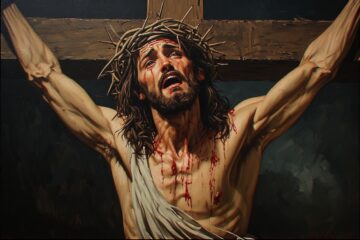
The manger calls us to repent and believe

One can sense even more so as we sit here in 2025, a deep longing for peace, a hushed expectancy in homes and churches across the land, an excitement that finds its focus in a single point in human history where a child in a manger in Bethlehem (the ‘House of Bread’) born to die, bears the weight of humanity’s sin.

Breadcrumbs from Bethlehem to the Messiah

As the days grow short and the year turns towards its end, our thoughts and our liturgies naturally and inevitably drift towards that small Judean town whose name echoes through the centuries. We picture a stable, a star, a mother and her child. Yet within that familiar scene lies a deeper, more nourishing narrative waiting to be traced, a trail of meaning that leads from ancient grain fields to the very heart of our worship.

The enduring significance of the Twelve Days of Christmas

The Twelve Days of Christmas is far more than a familiar seasonal refrain; it is a sophisticated mnemonic that conveys core Christian teachings through symbolic imagery. Rooted in centuries of tradition—and shaped during periods of religious tension—the carol offers a structured journey through foundational doctrines, reminding us of faith’s resilience and the enduring value of cultural memory. As modern life accelerates, its quiet wisdom invites a renewed appreciation of heritage, meaning and continuity.

Buy from me true gold

The Laodicean context of tepid self-reliance finds its direct parallel in the modern church’s temptation to measure its vitality by cultural influence, financial security, and numerical growth rather than by the fiery, refining work of the Spirit in the heart of the believer. The transaction when we dig deeper is therefore one of faith itself – a relinquishing of our own metrics of “success” to receive from Christ a success, a wealth that is purified through trial and anchored in eternity.

For those who walk in the valley of shadows

The loss of a child is a grief that words can scarcely capture, a sorrow that leaves families and friends navigating a landscape of profound pain. In the face of such tragedy, those who wish to offer comfort can feel helpless, while those who grieve can feel utterly alone. How do people of faith respond to a pain so deep? What solace can be found when the world has shattered?

Wheat

Effort v Efficacy

We can create grand plans and schemes, and these may well be blessed by God, but equally blessed is the hour spent in conversation with a stranger in a coffee shop, with someone who is being prompted by the Spirit to seek, such rejoicing as that one sinner repents. The soul of the one, is the mission field of the many, the single grain of wheat is a worthy and blessed harvest if our scythe is but sharpened for that solitary stem. As frustrating as that may be for our human sensibilities, the acceptance and rejoicing in the toil for the Lord, where the harvest may NOT be plentiful in our particular mission field, is still to be sought and prayed for diligently. Imagine if on that glorious day a stranger whom we do not remember talking to, whom we may not remember walking alongside, comes to us and says “I am here because you were there when I needed to hear the Gospel.”. Such joy and privilege to be a part of this plan of salvation, simply as a servant leading a single person to the Lord’s table of grace.

The spiritual cost of incomplete business

It begins, often, not with a clamour but with a whisper. A quiet, internal notation of a task left incomplete. Perhaps it is the half-completed tax return, its forms a silent rebuke from the drawer. It might be the unopened email from a colleague, its subject line hinting at a complexity we feel ill-equipped to handle. These are not merely items on a to-do list; they are what we might call ‘open loops’. They are the circuits of our intention and responsibility that we have left unclosed, and their persistent, ghostly presence in the background of our minds exerts a far greater toll than we often care to admit. This draining effect is a tangible, psychological weight that operates with a quiet and insidious efficiency, each unresolved matter constituting a small leak in the reservoir of our mental and emotional energy. From the perspective of a Christian faith, this phenomenon speaks to a deeper, theological reality about the nature of sin, responsibility, and the God who calls us into wholeness, inviting us to consider how our spiritual vitality is sapped by that which we fail to do.