On the beginning of all things

The Christian faith declares that “in him all things hold together” (Colossians 1:17), and modern physics unwittingly testifies to this truth. Matter is far stranger than it appears, with atoms mostly empty space and subatomic particles held together by forces calibrated with breathtaking precision. Science can describe this fine-tuning but cannot explain why it holds. Scripture can: the universe coheres because Christ sustains it by the word of his power.

Come and see!

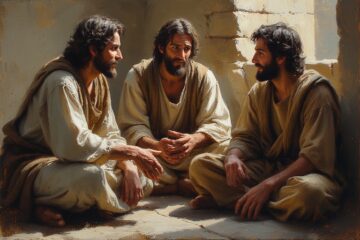
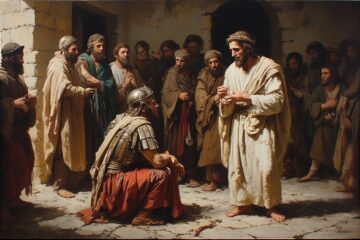
When Jesus invited people to “come and see,” He offered no programme, no strategy document, and no measurable outcomes beyond the transformation of human hearts. In three simple words, Christ extended an invitation that has echoed through twenty centuries of Christian witness. Perhaps the modern Church, with all its well-intentioned structures and initiatives, needs to recover something of this radical simplicity. What might it mean for our congregations to strip back the layers of institutional complexity and simply invite people to encounter the living Christ, just as Andrew and John did on that first extraordinary afternoon?

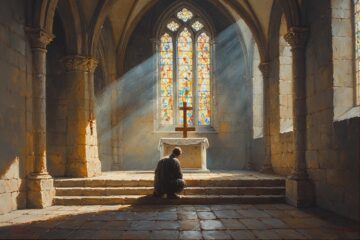
A man staring at the viewer

When God’s name goes global

When a post-exilic prophet spoke of God’s name being great “from the rising of the sun to its setting,” he uttered words that must have seemed impossible to his struggling community in Jerusalem. Yet today, young people in Britain, America and Europe are returning to churches their parents abandoned, whilst Iranian, Syrian and other Arab Muslims risk everything to worship Jesus in secret house churches across the Middle East. Malachi’s ancient prophecy is unfolding before our eyes in ways that challenge our assumptions about where faith flourishes and who the missionaries really are. This isn’t just history or theology – it’s the story of what God is doing right now, in the most unexpected places, through the most unlikely people.

Being Bere-AI-n.

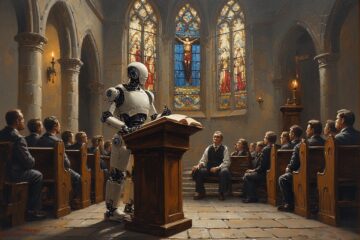
It does seem that in the last year or so the landscape of AI-enabled Christian technology has shifted significantly from experimental early adoption to widespread integration into daily spiritual life and church operations. How should we as Christians approach this rising tide of technology, how do we manage the tension between studying to learn and simply prompting for answers?

S1E2: The Christmas One.

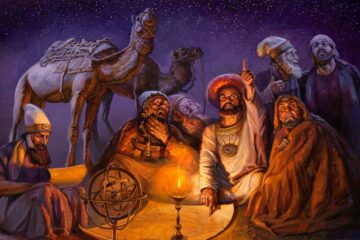
The story of God’s provision, it seems, is meticulously signposted, and our Anglican tradition, with its cherished three-fold cord of scripture, tradition, and reason, is wonderfully equipped to follow the breadcrumbs from prophecy to fulfilment and finally to our parish altar.

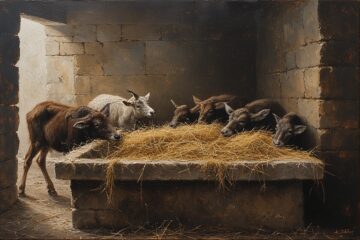
The manger calls us to repent and believe

One can sense even more so as we sit here in 2025, a deep longing for peace, a hushed expectancy in homes and churches across the land, an excitement that finds its focus in a single point in human history where a child in a manger in Bethlehem (the ‘House of Bread’) born to die, bears the weight of humanity’s sin.

Breadcrumbs from Bethlehem to the Messiah

As the days grow short and the year turns towards its end, our thoughts and our liturgies naturally and inevitably drift towards that small Judean town whose name echoes through the centuries. We picture a stable, a star, a mother and her child. Yet within that familiar scene lies a deeper, more nourishing narrative waiting to be traced, a trail of meaning that leads from ancient grain fields to the very heart of our worship.