Navigating the sacred vocation of marriage amidst the raging winds of modernity
During Bible study last night, we were looking at Colossians 3:15-25 and, eventually arrived at verses 18-21:
Wives, submit yourselves to your husbands, as is fitting in the Lord.
Husbands, love your wives and do not be harsh with them.
Children, obey your parents in everything, for this pleases the Lord.
Fathers, do not embitter your children, or they will become discouraged.
(ESV)
Now, to utter the word “submission” in polite contemporary society is to invite a reaction not entirely dissimilar to serving a platter of lukewarm tripe at a tea party; it is universally acknowledged as unpalatable, faintly offensive, and indicative of a profoundly backward palate (apologies if you actually LIKE tripe but seriously, yuck!). Yet, when we turn to the pages of the Paul’s epistle to the Colossians, we are confronted by this vision of the Christian household that steadfastly refuses to accommodate the frantic egalitarianism of our present age, presenting instead a magnificent, divinely ordained architecture that is as scandalous today as it was in the shadow of the Roman Empire.
The modern Christian couple attempting to navigate the sacred vocation of marriage will find themselves being continuously buffeted by the relentless gales of a secular morality that prizes absolute autonomy above all else.

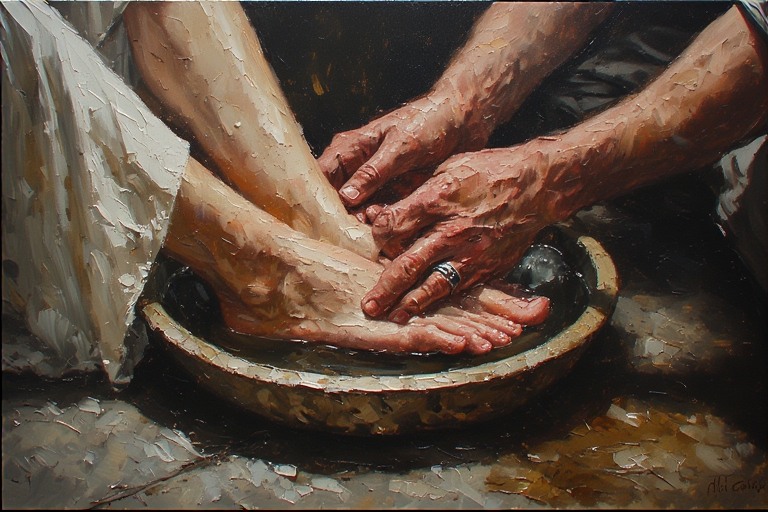
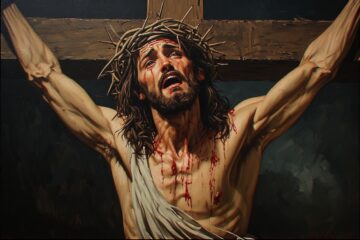
Now, in the sacramental understanding of Holy Matrimony, the altar at which a man and woman are joined is not merely the site of a sentimental legal contract, but rather the anvil upon which a profound, living liturgy is forged to reflect the very nature of Christ’s love for His Church. When Paul commands husbands to love their wives and abstain from harshness, he is not merely suggesting a polite domestic arrangement, but is laying upon the shoulders of the Christian man the glorious weight of cruciform headship, demanding that his leadership be characterised not by the thuggish domineering of a tyrant, but by the bleeding, calloused hands of a servant king.
The tragedy of our modern discourse is that we have allowed the sins of genuinely abusive, tyrannical men to entirely obscure the breath-taking beauty of male sacrifice, to become the lens through which we see submission and headship, forgetting that a husband’s true authority is measured entirely by his willingness to repeatedly die to his own selfish ambitions, comforts, and ego in order to secure the flourishing and radiant sanctification of his bride.
It is only within the impregnable fortress of such fiercely protective, self-emptying love that the corresponding call for a wife to submit to her husband ceases to be a burden and transforms, most miraculously, into a posture of profound trust and dignified grace.
One might suggest that to submit to a man who is utterly preoccupied with imitating the sacrificial love of Calvary is somewhat less of a theological chore and rather more of a sanctuary, for the voluntary yielding of a Christian wife is not the silencing of her intellect or the extinguishing of her gifts, but a joyous participation in the dance of the Trinity, where difference in function never betrays an inequality of essence. We must therefore gently but firmly remind the purveyors of contemporary social theory that the Christian family was never intended to be a corporation managed by co-equal executives nervously guarding their respective rights, but rather an organic, complementary union where the husband’s joyful responsibility and the wife’s trusting reverence interlock to create a fortress of stability in a desperately fragmented world.
And what of the children, those unpredictable vessels of energy and sin whom we are tasked with shepherding toward the kingdom of heaven? Paul’s injunction for children to obey, coupled with the stern warning to fathers not to provoke their offspring to wrath, strikes a delightfully realistic chord for anyone who has ever attempted to reason with a determined toddler in the sweet aisle of a supermarket or debate bedtimes with a suitably aggrieved pre-teen. The home must be a sanctuary of ordered love where boundaries are maintained not through the capricious exercise of petty dictatorship (although I do remind my children from time to time that they are not living in a familial democracy!), which only breeds resentment and exhaustion, but through a calm, authoritative grace that guides the young soul toward obedience, shielding them from a culture that tragically demands they become the architects of their own moral universe before they have even mastered the tying of their shoelaces.
So brothers and sisters, let’s not be cowed by the scowling disapproval of an age that has mistaken rebellion for liberation, and for the love of all that is Holy, let us not hastily (and continually) rewrite scripture, nor perform exegetical origami in order to appease the fleeting sensibilities of a passing generation.
We are called to something infinitely higher, and far more demanding than cultural relevance; we are called to build our homes upon the bedrock of God’s eternal design, trusting that the architecture of sacrificial headship and reverent submission is the very crucible in which saints are forged. Hold fast to the ancient, proven promises of the Word, dare to live out the beautiful, complementary scandal of the gospel within the walls of your own home, and watch as your faithful, counter-cultural obedience becomes a beacon of divine grace in a desperately wandering and dark world.
Pax
Shaun


0 Comments