News
On Judas at Christmas
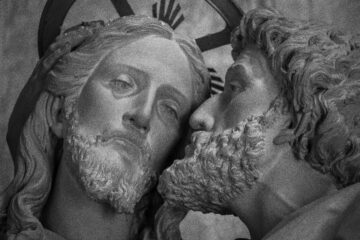
Often at this time of year, we may find ourselves thinking about grace and about the disciple who betrayed Jesus, the one who is a byword for disloyalty and duplicitous two-faced behaviour — Judas.
Often at this time of year, we may find ourselves thinking about grace and about the disciple who betrayed Jesus, the one who is a byword for disloyalty and duplicitous two-faced behaviour — Judas.

As the days grow short and the year turns towards its end, our thoughts and our liturgies naturally and inevitably drift towards that small Judean town whose name echoes through the centuries. We picture a stable, a star, a mother and her child. Yet within that familiar scene lies a deeper, more nourishing narrative waiting to be traced, a trail of meaning that leads from ancient grain fields to the very heart of our worship.

Ultimately, that’s the problem with power – those who seek to keep it shall lose it either by their own doing or that of a wiser/stronger person but ultimately because The Lord wills it.

The Twelve Days of Christmas is far more than a familiar seasonal refrain; it is a sophisticated mnemonic that conveys core Christian teachings through symbolic imagery. Rooted in centuries of tradition—and shaped during periods of religious tension—the carol offers a structured journey through foundational doctrines, reminding us of faith’s resilience and the enduring value of cultural memory. As modern life accelerates, its quiet wisdom invites a renewed appreciation of heritage, meaning and continuity.
Let’s be honest for a moment. Sometimes, in the quiet of a prayer or the chaos of the news cycle, a very human frustration bubbles up. It is the elephant in the room that we often feel too polite to mention: Lord, what is taking You so long? It has Read more

The Laodicean context of tepid self-reliance finds its direct parallel in the modern church’s temptation to measure its vitality by cultural influence, financial security, and numerical growth rather than by the fiery, refining work of the Spirit in the heart of the believer. The transaction when we dig deeper is therefore one of faith itself – a relinquishing of our own metrics of “success” to receive from Christ a success, a wealth that is purified through trial and anchored in eternity.

The loss of a child is a grief that words can scarcely capture, a sorrow that leaves families and friends navigating a landscape of profound pain. In the face of such tragedy, those who wish to offer comfort can feel helpless, while those who grieve can feel utterly alone. How do people of faith respond to a pain so deep? What solace can be found when the world has shattered?

We can create grand plans and schemes, and these may well be blessed by God, but equally blessed is the hour spent in conversation with a stranger in a coffee shop, with someone who is being prompted by the Spirit to seek, such rejoicing as that one sinner repents. The soul of the one, is the mission field of the many, the single grain of wheat is a worthy and blessed harvest if our scythe is but sharpened for that solitary stem. As frustrating as that may be for our human sensibilities, the acceptance and rejoicing in the toil for the Lord, where the harvest may NOT be plentiful in our particular mission field, is still to be sought and prayed for diligently. Imagine if on that glorious day a stranger whom we do not remember talking to, whom we may not remember walking alongside, comes to us and says “I am here because you were there when I needed to hear the Gospel.”. Such joy and privilege to be a part of this plan of salvation, simply as a servant leading a single person to the Lord’s table of grace.
A Call to Humble Service and Mission As a committed Anglo-Catholic and member of the Society of Our Lady of Walsingham, I often find myself drawn to the historical and spiritual depth of the Holy Orders that shape Christian ministry. Lately, I have been prompted to reflect deeply on the Read more

In this article I explore the dual authorship of the Bible – the human pen guided by the Divine breath. The sheer volume and exacting detail of over 300 fulfilled prophecies in Jesus Christ provide undeniable proof that Scripture is not merely history, but the inspired, authoritative, and miraculously preserved Word of God.