A game of Divine I-spy

Finding Jesus in the Old Testament Reading the Old Testament without looking for Jesus is a bit like trying to assemble a complicated piece of flat-pack furniture whilst ignoring the instructions and the illustration on the box; you might eventually produce something that stands upright, but you will almost certainly Read more

The great Cretan makeover

The heart of the letter to Titus lies in that wonderful assurance that the grace of God has appeared, bringing salvation for all people and training us to renounce ungodliness. We often think of grace as a lovely, soft word, perhaps something we say before a Sunday roast, but St Paul describes it as a tutor or a trainer that helps us grow. In our daily lives, from the kitchen to the marketplace, we are invited to adorn the doctrine of God our Saviour by living with kindness and integrity, making the Gospel look beautiful to a world seeking hope.

Titus 1:2 and the pre-temporal decree

Before the first quark flickered into existence, Godโ€™s salvific plan was already a finished masterpiece. Exploring Titus 1:2 and the outside-of-time-ness of the Creator, we find that our redemption is no divine “Plan B,” but an eternal decree of a God who cannot lie and whose love predates the universe.

Holy sweat and the joyful agony of prayer.

Let us be honest with one another: prayer is often rather harder than the hymnbooks suggest. We have all been there – starting a prayer only to find our minds have wandered to the shopping list. If this sounds familiar, take heart. You are not a failure; you are simply human. In Colossians 4:12, we meet Epaphras, who was ‘always struggling’ in prayer. The Greek word is agonizomai – the root of our word ‘agony’. But this wasn’t mere suffering; it was an athletic contest, a wrestling match in the arena of intercession. Discover why there is profound joy to be found in the holy sweat of persistent prayer…

What accord has Christ with Belial?

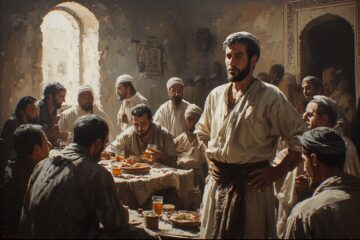
When we provide consecrated space for celebrations of Islamic religious practice and Quranic recitations that deny Christ’s deity, we are not demonstrating love. We are obscuring the gospel, confusing our witness, and prioritising worldly approval over obedience to Scripture and our own ecclesiastical commitments.

“Only say the word”

I write this to myself as much as to you dear reader, as a reminder of the perspective we must take through prayer and study. I write this in order that I may be reminded that Christ is sufficient and in Him all things needed are found, by Him all things existing are sustained and through Him all that I am is saved.