I just recently completed a Bible study on Colossians 4 and it hit hard. Let us be honest here: prayer is often rather harder than the hymnbooks (and our friends) often suggest. We have all been there- kneeling to pray, only to find our minds have wandered to the shopping list, a pressing problem with work or that peculiar noise the car has been making.
We feel guilty, as though we think God is keeping score of our spiritual lapses, and we wonder if perhaps He would prefer we simply sent a quick text message instead. If this sounds familiar, take heart. You are not a failure; you are simply human.
And it is precisely into this messy, distracted reality that the Apostle Paul introduces us to Epaphras, a man who understood that prayer is less about serene perfection and more about determined persistence.
We often harbour a rather serene image of prayer. We picture quiet chapels, flickering candles, and souls resting peacefully in the Divine presence. It is all very lovely, until one reads Colossians 4:12. Here we meet Epaphras, a fellow worker and faithful minister, who is described as ‘always struggling’ for the believers in Colossae.
The Greek word used here is agonizomai (ἀγωνίζομαι). It is where we get our word ‘agony’, which hardly sounds like a selling point for your morning devotions however, in the ancient world, the “agon” was the arena or stadium. This wasn’t merely a quiet contemplation; it was an athletic contest, a wrestling match. Epaphras wasn’t just thinking good thoughts about the Colossians or just sending vibes; he was spiritually sweating on their behalf.
He was in the gymnasium of the soul, lifting heavy burdens before the Throne of Grace.

Now, one might ask, where is the joy in such exertion? Surely prayer ought to be restful or at the very least without exertion? Yet, consider the athlete. There is a profound joy in the training, not merely in the medal. The joy lies in the purpose of the exertion. When we intercede with this level of grit and determination, we are participating in the labour of Christ Himself. It is an act of complete worship because it costs us something. It is love in motion.
There is also a specific delight in this athletic pursuit of prayer. It comes with the realisation that we are partnering with God to hold up the world. The ‘struggle’ is not because God is reluctant to hear, but because the spiritual stakes are high. Epaphras found joy because his struggle was rooted in a desire for others to stand ‘perfect and complete in all the will of God’ (v.12).
And you know, this struggle is not a solitary endeavour. Paul closes this letter with personal greetings, reminding us that we are part of a community. Epaphras wrestled in prayer, but he did so within the body of Christ. Our own “agonizomai” is strengthened when we pray alongside others, when we share the burden, and when we encourage one another to stay in the arena. It is a team sport, this intercession.
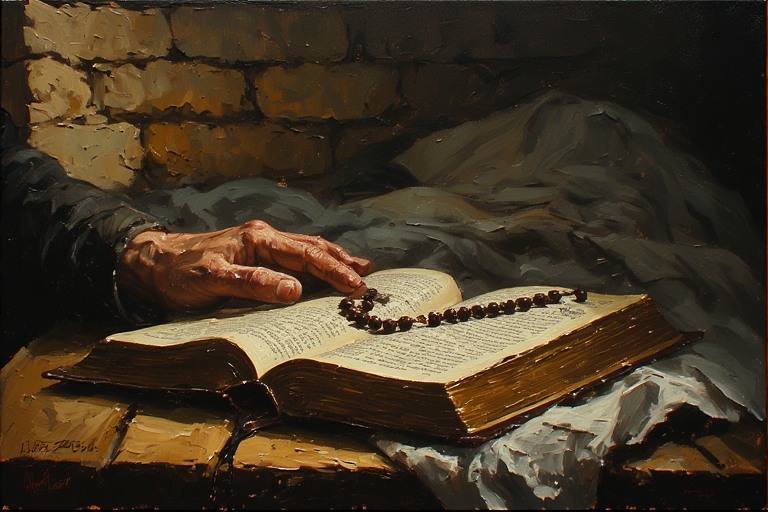
So, the next time you find prayer difficult, when your mind wanders and your spirit feels heavy, do not despair. You are not failing; you are training. Embrace the holy sweat. Like Epaphras, we labour not in our own strength, but in the stamina provided by the Saviour. It is a rigorous sport, this intercession, but the communion found in the arena is quite unparalleled.
Do put on your spiritual trainers; the race is worth running.


0 Comments