A short walk through a big field of wisdom.
Theological libraries across the globe are groaning under the sheer weight of scholarly volumes dedicated to the Sermon on the Mount, with countless academics dissecting every Greek syllable to uncover the deepest nuances of what was spoken on that hillside. While those weighty tomes certainly have their rightful place on a dusty vicarage shelf, my intention here is far less ambitious and hopefully far more practical. I simply want to break these verses down and offer a helpful, grounding perspective on a text that is so familiar we often risk losing sight of its profound and life-altering beauty.
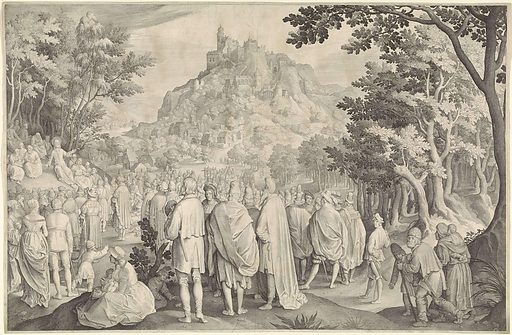
Nicolaes de Bruyn,1571–1656
Gathered upon a sloping Galilean hillside, an unwashed crowd of first-century Judean peasants sat listening intently as Jesus began to teach. This Sermon on the Mount was delivered to agrarian labourers and fishermen living under the heavy and omnipresent shadow of Roman occupation, and the words He spoke fundamentally upended their societal expectations and earthly anxieties.
Before we look at the historical and spiritual realities of this teaching, it is vital to ground ourselves in the text itself from the Gospel according to Matthew:
Blessed are the poor in spirit, for theirs is the kingdom of heaven.
Blessed are those who mourn, for they shall be comforted.
Blessed are the meek, for they shall inherit the earth.
Blessed are those who hunger and thirst for righteousness, for they shall be satisfied.
Blessed are the merciful, for they shall receive mercy.
Blessed are the pure in heart, for they shall see God.
Blessed are the peacemakers, for they shall be called sons of God.
Blessed are those who are persecuted for righteousness’ sake, for theirs is the kingdom of heaven.
(Matthew 5:3-10, ESV)
When Jesus spoke of the “poor in spirit,” He was looking out at a crowd intimately acquainted with crushing taxation and deep physical poverty, speaking directly to people who knew exactly what it meant to have absolutely nothing of worldly value. Yet He takes their physical destitution and translates it into a profound spiritual truth for them and us today, teaching that true blessedness begins when we recognise our utter dependence on divine grace rather than relying upon our own self-sufficiency. We encounter this beautiful spiritual bankruptcy when we approach the altar, bringing nothing but our profound need to be fed by the Bread of Life and acknowledging that our salvation rests entirely in His hands.
The original hearers mourning on that hillside were grieving a very physical oppression and a lost national sovereignty, carrying the heavy daily burdens of high infant mortality and backbreaking labour in an unforgiving ancient world. For the modern Christian journeying towards sanctification, this physical weeping exists and yet also translates into a godly sorrow for our own sins and the fractured nature of the world around us. This is a spiritual grief that is answered beautifully and consistently by the absolution declared in our liturgy and the comforting, abiding presence of the Holy Spirit.
In an era where the brutal Roman sword dictated land ownership and aggressive power was the ultimate currency, praising the meek was a startling paradox that would have sounded almost entirely foolish to worldly ears. Christ calls His modern readers to embody this gentle humility by submitting our wills entirely to God, reminding us that we should be far more concerned with heavenly realities than clawing for temporal power or engaging in the sort of petty parish politics that usually erupt over the flower rota or the colour of the new church carpet.
Those Galilean peasant audiences knew genuine, gnawing hunger and the very real physical threat of drought wiping out their fragile crop yields. Our Lord translates this visceral human craving for daily bread into a relentless desire for holiness and right living. This is a deep spiritual longing that is only truly satiated when our souls are washed and nourished through His most precious body and blood in the mystery of the Eucharist.
Justice in the ancient world was famously brutal and strict physical retribution was entirely expected, yet Christ demands that His followers break this cycle by extending the same lavish forgiveness they themselves have received from the Father. This translates into a daily spiritual discipline of grace for the modern believer, slowly stripping away our natural vindictiveness and transforming us into vessels of His divine mercy within our own communities and families.
While rigorous ritual purity and complex handwashing laws dominated the temple Judaism of the first century, Jesus demands an internal consecration that goes far beyond the physical cleaning of cups and plates. This points us directly towards the absolute necessity of regular and honest self-examination, preparing our hearts through confession to serve as a fitting, purified tabernacle for His abiding sacramental presence in our daily lives.
Amidst zealots actively plotting violent physical rebellion against the empire, Christ championed the incredibly difficult and costly work of true reconciliation. We share in this divine sonship not by fighting worldly battles, but by actively extending the peace we exchange at the altar out into a fractured and hostile society, choosing to heal deep divisions rather than stoking the fires of modern outrage.
Finally, Jesus prepared His followers for the inevitable physical clash with an empire that demanded total allegiance, warning them that true righteousness comes at a steep and sometimes fatal cost. While we in the modern West might merely face polite mockery at dinner parties rather than the threat of the arena, a genuine conformity to the cross always invites the world’s disdain, yet it assures us of our eternal place within the kingdom of heaven.
These beatitudes are not simply a daunting set of moral examination criteria but a gracious, flowing invitation to participate in the very life of Christ. Through them, He gently transforms our mundane existence into a vessel for heavenly glory as we continue to walk the long, beautiful path of sanctification within the sacramental life of the Church.
0 Comments