“For from the rising of the sun to its setting my name will be great among the nations, and in every place incense will be offered to my name, and a pure offering. For my name will be great among the nations, says the LORD of hosts.”
Malachi 1:11 (ESV)
Scripture spans across the centuries with urgent energy and there are certain chapters or verses that call out to us, that remain relevant in a new context or setting, as though (I know, I know) they were written not merely for their original hearers but for every generation that would follow. Malachi 1:11 is surely one of them for me. Reading this in our own time, after two millennia of Christian witness and in the midst of surprising revivals in unlikely places, I cannot help but sense that this ancient prophecy is being fulfilled before our very eyes, yet again.
A shocking word to a disappointed people
To grasp the revolutionary nature of Malachi’s prophecy, we need to understand what “the Name” meant in ancient Israel. The Name of the LORD was never merely a label but represented the very presence and character of God himself dwelling amongst his people. When Moses asked at the burning bush, “If I come to the people of Israel and say to them, ‘The God of your fathers has sent me to you,’ and they ask me, ‘What is his name?’ what shall I say to them?” (Exodus 3:13), he was seeking not information but encounter, not a title but revelation of divine character.
Throughout Israel’s history, the Name dwelt in specific, carefully delineated places. God promised Moses, “In every place where I cause my name to be remembered I will come to you and bless you” (Exodus 20:24), yet this was quickly focused into particular locations: upon the Ark of the Covenant (2 Samuel 6:2), within the Tabernacle where God said “There I will meet with you, and from above the mercy seat… I will speak with you” (Exodus 25:22), and ultimately in Solomon’s Temple, which was built explicitly as “a house for the name of the LORD” (1 Kings 8:20). Solomon himself acknowledged this mystery at the Temple’s dedication, asking “But will God indeed dwell on the earth? Behold, heaven and the highest heaven cannot contain you; how much less this house that I have built!” Yet he prayed that God’s eyes and heart would be there perpetually (1 Kings 8:27-29).
The Deuteronomic legislation made this centralisation explicit: sacrifice could only be offered “at the place that the LORD your God will choose, to make his name dwell there” (Deuteronomy 12:11). Jerusalem was not merely the capital city but to all intents and purposes the theological centre of the universe, the singular point where heaven and earth met, where the Name could be invoked and where the Holy One of Israel could be legitimately approached through the prescribed sacrifices.
Malachi wrote in what must have seemed like an anti-climactic moment. The great prophetic promises of return from exile had been fulfilled in only the most minimal, disappointing way. The Temple had been rebuilt, yes, but it was a poor shadow of Solomon’s glory, and the Persian Empire still ruled over the land. More troubling still was the spiritual state of the community, for the very priests who should have been exemplars of devotion had grown cynical and careless, offering blemished animals in sacrifice and treating the worship of the LORD as a tedious burden (and perhaps we can all see this now in the church today in certain institutions?).
Into this context of priestly corruption Malachi speaks his startling inspired word. The structure of chapter one builds through divine love (verses 2-5), through priestly contempt for God’s Name (verses 6-10), and then bursts forth with this extraordinary proclamation. The literary effect is almost shocking, for Malachi is essentially saying to his contemporaries on behalf of God, “You priests in Jerusalem despise my Name, but look, from the rising of the sun to its setting, my Name will be great amongst the very Gentiles you regard with such contempt.” How would they have understood a prophecy that seemed to overturn everything they knew about the particularity of Israel’s place, it’s worship, about sacrifice being offered “in every place” rather than in the one place where the Name dwelt?
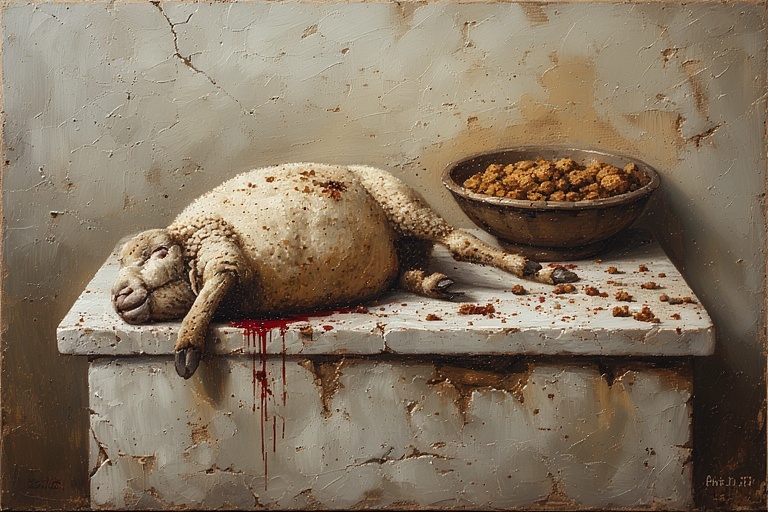
The pure offering revealed
So we then turn to the New Testament, and here we find that Malachi’s prophecy is fulfilled in ways both more radical and more concrete than anyone might have imagined. The Apostle Paul, himself a former Pharisee , writes to describing his ministry amongst the Gentiles in explicitly priestly and sacrificial language. In Romans 15:16, he speaks of being “a minister of Christ Jesus to the Gentiles in the priestly service of the gospel of God, so that the offering of the Gentiles may be acceptable, sanctified by the Holy Spirit.” Here is the pure offering that Malachi foresaw: not animals slaughtered in the Temple but transformed lives offered to God through the Spirit.
The early Church Fathers grasped hold of Malachi 1:11 as one of the clearest prophetic attestations to Christian worship. Irenaeus argued that this verse explicitly predicted the Eucharist, the pure offering made by Christians in every place from the rising to the setting of the sun. The prophecy could not refer to Jewish worship in the Temple because that was geographically limited to Jerusalem, yet Malachi speaks specifically of “incense” and “a pure offering” in every place, language that demands liturgical worship. The Christian Eucharist, celebrated in house churches and catacombs from Mesopotamia to Spain, from North Africa to Britain, fulfilled the prophetic vision perfectly.
This reading aligns with our understanding of the Eucharist as genuine spiritual sacrifice, a participation in Christ’s once-for-all offering on Calvary that is made present in every celebration. When Christians gather around the Lord’s Table anywhere in the world, they are offering the same pure sacrifice that Malachi foresaw. Yet we must not limit the prophecy to the Eucharist alone, for the New Testament’s vision encompasses the daily sacrifice of praise, the prayers of the saints, works of mercy and justice, and indeed the whole life of discipleship lived in conscious submission to the Name that is above every name.
Malachi’s vision unfolding today
Now, if we look at the world today with eyes alert to the movements of God’s Spirit, we cannot help but see Malachi’s prophecy continuing to unfold in remarkable ways. Consider what is happening in the United Kingdom. A July 2025 article exploring timely research (https://www.biblesociety.org.uk/research/quiet-revival) undertaken documented a surprising revival of Christian faith amongst the young, particularly young men. Church attendance amongst eighteen to twenty-four year-olds has quadrupled since 2018, from a mere four percent to sixteen percent. This “quiet revival” is occurring with even greater force in a nation that many had written off as post-Christian, where the decline of institutional religion seemed irreversible.
What is particularly striking is the diversity of this British phenomenon. Whilst CofE attendance continues to decline, the growth is concentrated amongst more traditional Anglican and Anglo-Catholic churches, as well as Catholics and Pentecostals, and nearly a third of young churchgoers come from ethnic minority backgrounds, many of them immigrants or children of immigrants who have brought a vibrant faith from the Global South. Here we see how God’s Name is being magnified amongst the nations not through Western missionary expansion but through reverse mission, through believers from Africa, Latin America, and Asia who have come to re-evangelise the nations that once sent missionaries to their ancestors.
Even more astonishing is what is occurring in the Middle East, in the heartland of Islam where one might least expect Christian faith to advance given the consequences of following Christ.
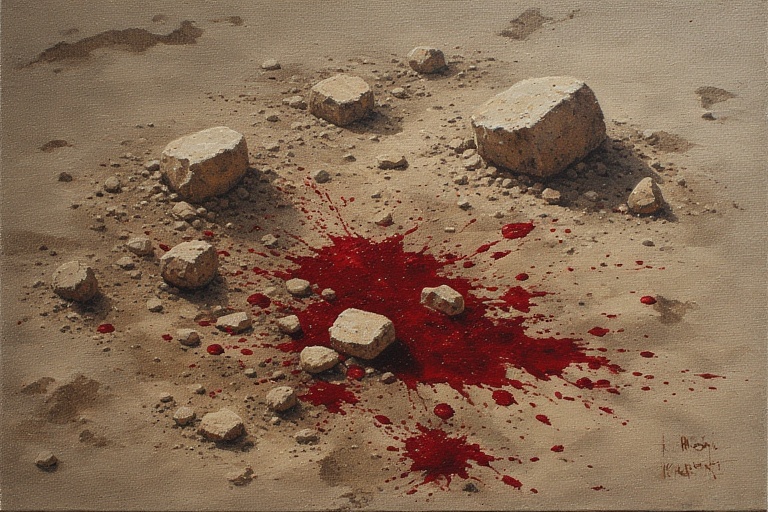
In Iran, estimates suggest that between one and three million Iranians have converted to Christianity in recent decades, many meeting in underground house churches that echo the clandestine gatherings of the early Church under Roman persecution. These Iranian believers face imprisonment, torture, and even death for their faith, yet the movement continues to grow at approximately 5.2 percent annually. In Saudi Arabia, there are now reports of underground Christian communities, with some estimates suggesting that Christians may comprise as much as ten percent of the population when one accounts for both expatriate workers and Saudi converts.
These underground churches offer incense and pure offerings to the Name of the LORD in circumstances that would have been utterly incomprehensible to Malachi. They worship in hiding, without temples or trained clergy, without the protection of civil law. It seems that he Spirit is working in the lands wherein it had many of its first fruits that were snuffed out by militarised Islamic conquest. They gather in living rooms and basements, they pass around Bibles printed on secret presses or accessed through encrypted digital networks, they celebrate the Eucharist with whatever bread and wine they can quietly acquire, knowing that discovery could mean the loss of everything. Yet in their very weakness and vulnerability, they bear witness to the truth that God’s Name will be great amongst the nations regardless of human power structures, regardless of whether governments permit or forbid, regardless of whether the offering is made in magnificent cathedrals or in hidden rooms behind locked doors.
Circling back to the industrial heartlands of Great Britain, the forgotten North and areas where recent tradition suggests a lack of interest in the Christian faith, the Holy Spirit, much to the disquiet and chagrin of what is now a Left-leaning “socialists-at-prayer”, liberal and anti-Christ club at Lambeth, has been working and is bringing many of the disenfranchised, downtrodden, forgotten or sacrificed youth in working towns to seek and grow in a faith grounded in mercy, grace, justice and an identity outside of socio-economic circles. Christ is moving across this land we cannot but marvel and rejoice at those He is bringing to the light.
When young British men who were raised in post-Christian secularism begin to seek out churches with renewed hunger, when Iranian Muslims risk their lives to follow Jesus Christ, when Saudi converts organise clandestine worship gatherings, we are witnessing the ongoing fulfilment of the prophetic word that God’s Name will be great from the rising of the sun to its setting. These are not isolated curiosities but part of a larger tapestry being woven by the Spirit across continents and cultures, a tapestry whose pattern was first revealed to a prophet in post-exilic Jerusalem who could scarcely have imagined how God would bring his word to pass.
Living Under the Great Name
What does Malachi 1:11 demand of us who read it in this particular moment? First, it calls us to expand our vision beyond the narrow confines of our own experience. How easy it is to assume that the decline we may observe in Western Christianity represents the whole story, to forget that whilst some branches of the Church wither, others are flourishing with remarkable vitality. The growth in British churches amongst the young and the extraordinary expansion of Christianity in the Middle East under persecution should remind us that God’s purposes are not frustrated by secularisation or opposition.
Second, this text challenges us to examine the quality and sincerity of our own worship. Malachi’s original indictment was not against pagans who knew no better but against priests who had grown contemptuous of the worship they were supposed to lead. The contrast between the blemished sacrifices offered by cynical priests in Jerusalem and the pure offering rising from the nations serves as a perpetual warning against going through the motions of religion without genuine devotion. We who have the immense privilege of gathering freely to worship, who possess Bibles in abundance, who can celebrate the sacraments without fear of persecution, stand in particular danger of taking these gifts for granted in a way that dishonours the Name we claim to serve.
Third, Malachi’s prophecy ought to reshape our understanding of mission, for it reminds us that the spread of the gospel and the magnification of God’s Name amongst the nations is ultimately God’s work, not ours. The underground church in Iran has not emerged because of strategic mission plans developed in Western agencies but because the Spirit of God moved upon the hearts of Muslims through dreams, through satellite television broadcasts, through the witness of converted family members, through a hundred means that defied human programming. Our calling is to be faithful in our own contexts, to offer the pure sacrifice of lives wholly devoted to Christ, and to trust that God will use our faithfulness as part of his larger purpose.

When Malachi first spoke these words, Jerusalem was a provincial backwater, the Jewish community was small and struggling, and the survival of their distinct religious identity seemed uncertain. The prophet could not have known that within a few centuries, the Name he proclaimed would be carried to the ends of the earth, that within a millennium it would be confessed by millions across continents, that house churches would gather in secret in modern Tehran or young men in contemporary Manchester would return to churches their grandparents had abandoned. Yet Malachi spoke in faith, trusting that the LORD of hosts would bring his word to pass.
We who read his prophecy now stand in a privileged position to see its fulfilment unfolding, but we also stand under the same call to faithfulness. Will we offer pure sacrifices to the Name that is great amongst the nations, or will we grow cynical and careless in our worship? Will we embrace the breadth of God’s purposes for all peoples, or retreat into narrow tribalism? Every time we gather to offer the Eucharistic sacrifice with sincere hearts, every time we pray in the Name of Jesus with genuine faith, every time we bear witness to Christ’s lordship in word and deed, we are adding our voices to that great chorus of praise that rises from every place, from the rising of the sun to its setting, making the Name great amongst the nations just as the LORD of hosts declared through his prophet long ago.
Dominus Vobiscum
0 Comments