Why did Jesus choose to clothe His sacrifice in the ancient and prophetic language of Psalm 22 as He hung upon the Cross?
As we fast approach Good Friday when we stand before the foot of the Cross during the solemn liturgy of that day, we may often bear witness to the ceremonial stripping of the altar, a hauntingly beautiful act that leaves the sanctuary bare and cold, mirroring the as it were vulnerability of our Saviour on that tree.
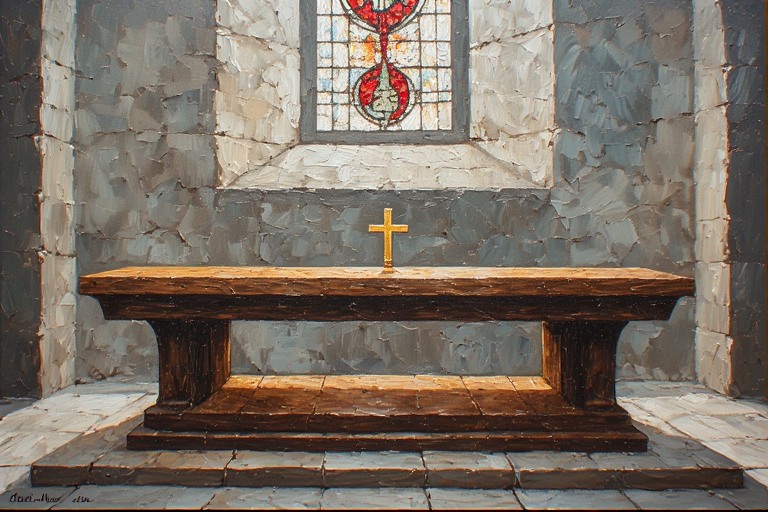
It is in this atmosphere of starkness that the reality of the words of Psalm 22 resonate most deeply, for they are the very words that Jesus Himself chose to utter in His darkest hour. When Jesus cried out, “Eloi, Eloi, lema sabachthani?” in Mark 15:34, He was not expressing a private sentiment of despair; rather, He was intentionally citing the opening of a Psalm that served as the prophetic blueprint for His entire passion. For the gathered crowds, particularly those versed in the Hebrew scriptures, this cry was a call to remember the whole of the Psalm, which moves from the very dust of death to the heights of universal dominion
This was not a cry of despair, this was a declaration, at the point when the world considered Him to be at His most defeated, of HIs ultimate victory.
The linguistic shift here is particularly fascinating for us to ponder, as Matthew and Mark record the cry in Aramaic, the common tongue of the people whilst the Psalm was written in Hebrew. By translate-quoting the Psalm into Aramaic, Jesus was making the deep, theological truths of the Psalm from ancient scriptures accessible to the very people mocking Him, bridging the gap between the formal worship of the Temple and the gritty, painful reality of the Golgotha hillside. Yet, this shift also led to a moment of tragicomic confusion among the onlookers, who, hearing the word “Eli,” mistakenly thought the Lord was calling for the prophet Elijah. It is a poignant, slightly ironic reminder of how often we misunderstand the divine purpose even when it is being shouted directly at us, as the crowd looked for a miraculous earthly rescue while the King of Glory was busy winning a much greater, eternal victory.
Psalm 22
My God, my God, why have you forsaken me?
Why are you so far from saving me, from the words of my groaning?
O my God, I cry by day, but you do not answer, and by night, but I find no rest.
Yet you are holy, enthroned on the praises of Israel.
In you our fathers trusted; they trusted, and you delivered them.
To you they cried and were rescued; in you they trusted and were not put to shame.But I am a worm and not a man, scorned by mankind and despised by the people.
All who see me mock me; they make mouths at me; they wag their heads;
“He trusts in the Lord; let him deliver him; let him rescue him, for he delights in him!”Yet you are he who took me from the womb; you made me trust you at my mother’s breasts.
On you was I cast from my birth,and from my mother’s womb you have been my God.
Be not far from me, for trouble is near,and there is none to help.Many bulls encompass me; strong bulls of Bashan surround me;
they open wide their mouths at me, like a ravening and roaring lion.I am poured out like water, and all my bones are out of joint;
my heart is like wax; it is melted within my breast;
my strength is dried up like a potsherd, and my tongue sticks to my jaws;
you lay me in the dust of death.For dogs encompass me; a company of evildoers encircles me;
they have pierced my hands and feet – I can count all my bones –
they stare and gloat over me;
they divide my garments among them,and for my clothing they cast lots.But you, O Lord, do not be far off! O you my help, come quickly to my aid!
Deliver my soul from the sword, my precious life from the power of the dog!
Save me from the mouth of the lion! You have rescued me from the horns of the wild oxen!I will tell of your name to my brothers; in the midst of the congregation I will praise you:
You who fear the Lord, praise him! All you offspring of Jacob, glorify him, and stand in awe of him, all you offspring of Israel!
For he has not despised or abhorred the affliction of the afflicted,
and he has not hidden his face from him, but has heard, when he cried to him.From you comes my praise in the great congregation; my vows I will perform before those who fear him.
The afflicted shall eat and be satisfied; those who seek him shall praise the Lord! May your hearts live forever!All the ends of the earth shall remember and turn to the Lord,
and all the families of the nations shall worship before you.
For kingship belongs to the Lord, and he rules over the nations.All the prosperous of the earth eat and worship; before him shall bow all who go down to the dust, even the one who could not keep himself alive.
Posterity shall serve him; it shall be told of the Lord to the coming generation;
they shall come and proclaim his righteousness to a people yet unborn, that he has done it.
In the light of the proto-evangelium that first promise of the Gospel in Genesis 3:15 – this moment represents the “bruising of the heel” in its most literal and agonising form. The serpent, having waited since the dawn of time to strike the seed of the woman, finally finds his mark, yet Psalm 22 reveals that this strike is the very mechanism of the serpent’s own destruction. We see this play out in the vivid imagery of the “bulls of Bashan” and the “dogs” that encompass the sufferer in verses twelve and sixteen.

We understand these not merely as poetic flourishes but as references to the very real demonic forces and the hostile earthly powers – the Sanhedrin and the Roman soldiers – who circled the Cross like scavengers. They thought they were the hunters, but in the divine economy of the Atonement, they were merely the instruments used to bring about the sacrifice that would eventually disarm those demonic powers forever.
As a conservative Anglo-Catholic, I find great weight in the reality of Penal Substitution present here, for it is only because Jesus truly stood in our place, bearing the judicial weight of our sin, that He could experience that genuine “forsakenness.” He was not merely acting; He was entering the state of separation that we deserved, so that the Holy Trinity could remain just while also being the justifier of the ungodly. This is the “cup” He prayed would pass from Him, and in drinking it to the dregs, He transformed the Cross into an holy altar. The Psalm tracks this perfectly, moving from the physical horrors of bones out of joint and parched throats to the sudden, triumphant declaration in verse twenty-one: “You have rescued me from the horns of the wild oxen!” This is the hinge of history, where the suffering Servant looks past the grave to the resurrection.
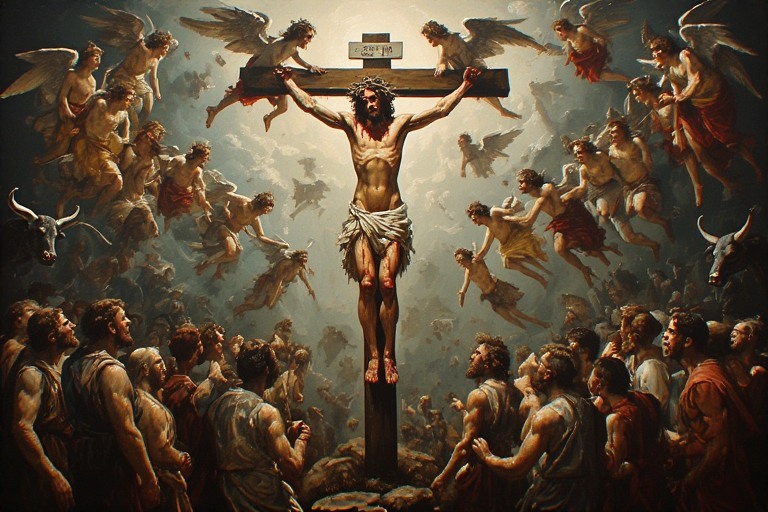
The final section of the Psalm shifts focus from the individual sufferer to the global consequences of His vindication, which is why we must always view the Crucifixion as a missionary event. The psalmist tells us that “all the ends of the earth shall remember and turn to the Lord,” a promise that finds its fulfilment in the life of the Church and the spreading of the Gospel to every nation. When Jesus finished His work, He was not just ending His pain; He was inaugurating a kingdom where “posterity shall serve Him” and “men shall tell of the Lord to the coming generation.”
It is a reminder that our faith is not a private, internal matter, but a public proclamation of a historical fact: that the King has died, the King is risen, and the King has claimed the nations as His heritage.
As we reflect on this, we should be comforted by the fact that there is no depth of human experience, no matter how dark or desolate, that our Lord has not already sanctified by His presence. When we feel “forsaken” by circumstances or by God Himself, we are not entering a new territory, but rather stepping into a path that has already been trodden by the Son of God, who carries our cries in His own. We are invited to see our own struggles not as signs of God’s absence, but as opportunities to participate in the life of the one who turned a cry of dereliction into a shout of cosmic triumph. Let us, therefore, live as a people who know the end of the Psalm, holding fast to the truth that because He was forsaken for a moment, we are held for eternity.
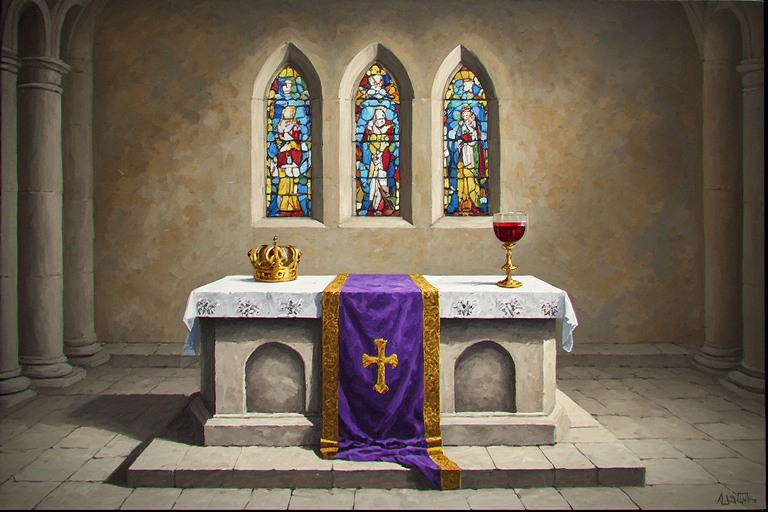
Consider, then, as you go about your week that the same Jesus who quoted the Psalms in His agony is the one who now sits at the right hand of the Father, ever living to make intercession for you using that same, eternal Word. We serve a God who is not distant from our pain but who has worn it as a garment, ensuring that even our most desperate cries are ultimately folded into His great song of victory.
Pax Vobiscum.


0 Comments