Finding the Kingdom at the end of ourselves

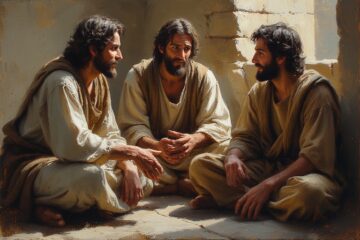
When Jesus stepped away from the pressing crowds to deliver His most famous sermon, He was speaking directly to a small group of disciples whose rough, working-class backgrounds naturally prepared them to understand the harsh realities of worldly poverty. By declaring that the kingdom of heaven belongs to the “poor in spirit”, He brilliantly subverted their expectations of earthly glory, teaching them instead that true spiritual wealth begins with the quiet recognition of our complete moral bankruptcy. This opening blessing sets the tone for everything that follows, acting not as a demanding ladder of moral perfection for us to climb, but rather as a mirror designed to reveal our desperate need for a Saviour.

A game of Divine I-spy

Finding Jesus in the Old Testament Reading the Old Testament without looking for Jesus is a bit like trying to assemble a complicated piece of flat-pack furniture whilst ignoring the instructions and the illustration on the box; you might eventually produce something that stands upright, but you will almost certainly Read more

Titus 1:2 and the pre-temporal decree

Before the first quark flickered into existence, Godโ€™s salvific plan was already a finished masterpiece. Exploring Titus 1:2 and the outside-of-time-ness of the Creator, we find that our redemption is no divine “Plan B,” but an eternal decree of a God who cannot lie and whose love predates the universe.

What accord has Christ with Belial?

When we provide consecrated space for celebrations of Islamic religious practice and Quranic recitations that deny Christ’s deity, we are not demonstrating love. We are obscuring the gospel, confusing our witness, and prioritising worldly approval over obedience to Scripture and our own ecclesiastical commitments.

Come and see!

When Jesus invited people to “come and see,” He offered no programme, no strategy document, and no measurable outcomes beyond the transformation of human hearts. In three simple words, Christ extended an invitation that has echoed through twenty centuries of Christian witness. Perhaps the modern Church, with all its well-intentioned structures and initiatives, needs to recover something of this radical simplicity. What might it mean for our congregations to strip back the layers of institutional complexity and simply invite people to encounter the living Christ, just as Andrew and John did on that first extraordinary afternoon?

Quantum AI, Interdimensional beings, and the future of the soul

It feels very much as we move into 2026 that the debates about parallel dimensions have finally moved out of late-night chatroom sessions straight into the boardroom (or at least over a coffee before a big meeting!) which, if we are honest, was probably not on our bingo cards. When we talk about dimensions we arenโ€™t just talking about science fiction anymore; weโ€™re talking about empirical reality. This shift has been driven by the sheer, staggering performance of the latest quantum processors, like Googleโ€™s Willow chip.