I love this time of year (did I mention that somewhere else before?) and whilst it may be dark both when we rise and when we retire there is a very real light ahead.
One can sense even more so as we sit here in 2025, a deep longing for peace, a hushed expectancy in homes and churches across the land, an excitement that finds its focus in a single point in human history where a child in a manger in Bethlehem (the ‘House of Bread’) born to die, bears the weight of humanity’s sin. We are right of course in this season, to be captivated by the beauty and majesty of this scene imagined and portrayed in so many ways across the ages. From cards, to plays, to paintings we have all sought to capture the essence, the emotion, the NEED for the Christ child.
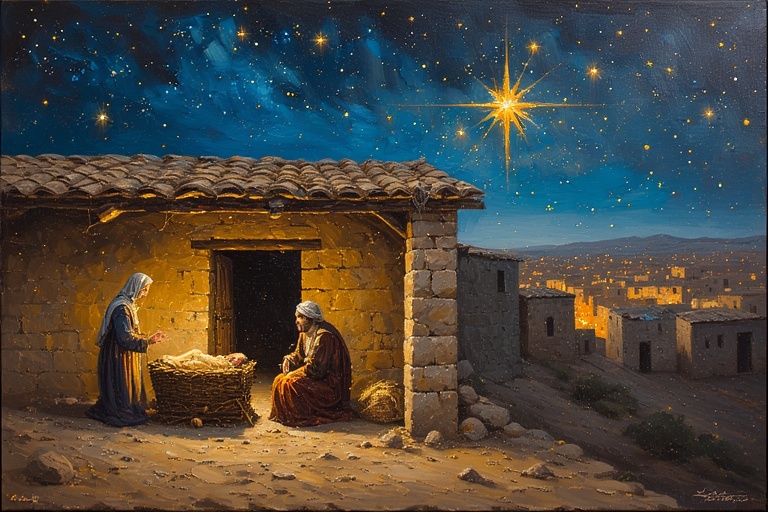
The creator of the cosmos, the eternal Word through whom all things were made, confined willingly to the vulnerability of infant flesh that He Himself created. This divine humility is staggering, a love SO profound it willingly entered into our frailty and existence. The carols and the candles, the greenery and the gifts, all point to this sublime, gentle yet powerful mystery. But, if we linger only at the manger’s edge, if we gaze only at the child who would be King, we risk missing the very reason for the season. The incarnation is not an isolated moment of tender poetry but more, it is the decisive, long-planned intervention of a loving God into a story that had gone terribly awry (an understatement I grant you). It is the opening PHYSICAL move in a divine rescue mission in place before time began.
To understand the full splendour if Christ’s birth we must first understand why it was necessary, what we needed rescuing from.
The story of our need begins not in Bethlehem, but in that garden of old. Humanity, crafted in the very image of God and placed in a world of perfect harmony, was given a simple foundational command woven from love and freedom. Yet, as the narrative in Genesis recounts our first parents listened to a different voice, one that promised godhood on their own terms (Genesis 3). In that act of perhaps naïve but ultimately distrustful disobedience, sin entered the human heart, strife entered creation and our condition was changed. The intimate fellowship with God was fractured because this was no minor transgression, it was a fundamental reorientation of the human will away from its source of life. The consequence, as the Apostle Paul would later describe it, was that “sin came into the world through one man, and death through sin” (Romans 5:12).
This is the bleak backdrop against which the bright star over Bethlehem shines for we were a people lost, alienated from our creator and from our own true purpose, living in a kingdom of our own making, a realm of shadows and brokenness.

And so, the purpose of the incarnation comes into sharp, glorious focus. God did not become man merely to sympathise, or to deliver a new set of instructions – He came to do for us what we could never do for ourselves; to reclaim His lost territory (us), to restore His rightful rule (in us), and to reconcile humanity to Himself through Himself and this is the ‘Kingdom of God’ that Jesus would proclaim. When the angel told Joseph to name the child Jesus, for “He will save His people from their sins” (Matthew 1:21), it was a formal declaration of war on that old, entrenched regime of sin and death and the birth in Bethlehem was the landing of the liberating King on enemy-occupied shores. This is why, after John the Baptist’s voice fell silent, Jesus emerged in Galilee with a proclamation that carried the full weight of heaven’s intent. “The time is fulfilled,” he declared, “and the kingdom of God is at hand, repent and believe in the gospel” (Mark 1:15). This was THE OFFICIAL royal edict – the long-awaited moment of restoration had arrived in His very person and His summons contained two active, inseparable responses repent, and believe and not just because we should align ourselves with God but more, the demand to repent and believe was and remains a very deep and dark truth, an admission that all is not well with the human condition.
But what do these words mean, what do they REALLY mean for the person? Not as dusty theological concepts, but as human actions?
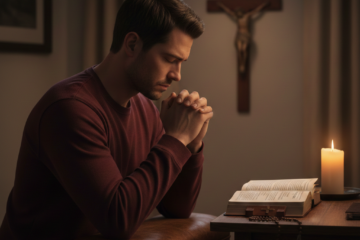
Well, to truly repent is far more than feeling a twinge of regret. The Greek word, metanoia, signifies a change of mind, a fundamental turning around, a conscious decision, awakened by God’s grace, to stop facing towards the old kingdom of self-rule, sin, and death, and to turn towards the new kingdom that Christ was, is establishing. It is an admission that our chosen path has led us astray, and a deliberate about-face to orient our lives toward the light that has dawned in Bethlehem. It involves a honest reckoning with our own complicty in the world’s brokenness, and a willingness to let our old ways of thinking and being be dismantled. It is the active, ongoing posture of saying ‘no’ to the rebellion that began in Eden and ‘yes’ to the rightful rule of the King born in the stable.
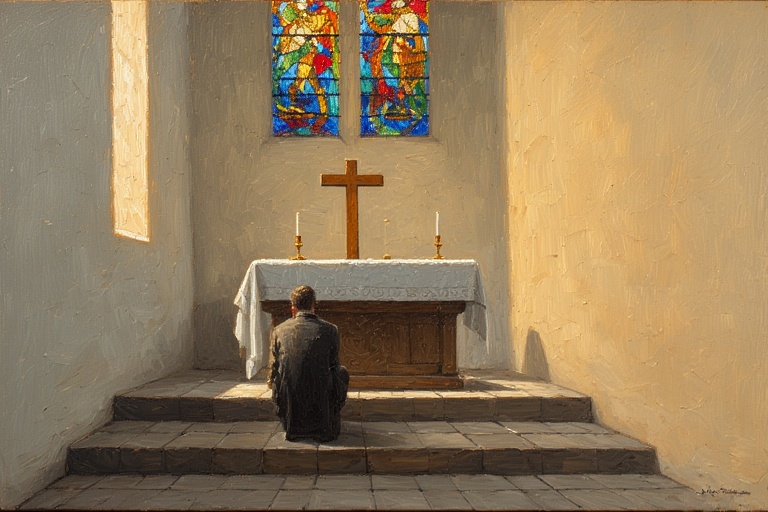
To believe, similarly, is infinitely more than intellectual assent. It is pistis, meaning trust, allegiance, fidelity. It is to place the full weight of your confidence and your future upon the person and work of this King. It is to trust that His death and resurrection are the true remedy for the sin that separates us from God, and to pledge your primary allegiance to His kingdom above all other competing loyalties—be they cultural, political, or personal. If repentance is turning from, belief is turning towards and clinging to. It is the active, ongoing posture of reliance and loyalty, staking your life on the truth that Jesus is who he said he is, and that His way is the only way back to life as it was meant to be.
These two actions are the required response because of the nature of the gospel itself. As Jesus and the New Testament explain it, the ‘good news’ is not a general message of kindness or a simple call to be better. It is the specific, historical announcement of what God has accomplished in Christ, it is the news that in Jesus, God’s promised Kingdom has broken into history, that through His sinless life, His atoning death on the cross and His victorious resurrection, he has defeated sin, death, and the powers of darkness. He has paid the debt we could not pay and offers forgiveness, reconciliation, and new life as gifts of grace to all who would receive them. The benefit of truly repenting and believing this gospel is nothing less than total restoration. It is pardon for our wilful rebellion, adoption into God’s family, the indwelling presence of His Spirit to begin healing our broken nature, and the sure hope of eternal life within His renewed creation. We are transferred from the kingdom of darkness into the kingdom of God’s beloved Son (Colossians 1:13).
And how do we, with our wills still bent by the old rebellion, possibly manage this turning and trusting? We cannot muster it from within ourselves. This is where the glorious thread of God’s enabling grace runs through everything. The Holy Spirit, the very presence of God with us, is the one who opens our eyes to see the beauty of the King and our own desperate need. He convicts us of sin, softens our hearts to make repentance possible, and awakens faith within us as we hear the gospel proclaimed (Ephesians 2:8). Our response is just that – a response to His prior, initiating work. He is the divine enabler, the one who makes the summons of Jesus not a crushing demand, but a lifeline we have the spiritual capacity to grasp.
So what does this mean for us now, two millennia removed from the manger and the ministry in Galilee? We are those of whom Jesus later spoke to Thomas, “Blessed are those who have not seen and yet have believed” (John 20:29). The Christmas story is our story too and the purpose of the incarnation – to reclaim, restore, and reconcile – is a purpose being worked out in real time in the lives of all who heed that beautiful, urgent summons. The ‘House of Bread’ gave us the Bread of Life not simply to admire, but to consume, to live by. This festive season, as we gaze once more upon the manger, let us see it for what it truly is; the beachhead of a kingdom.
The infant’s cry is the King’s proclamation.
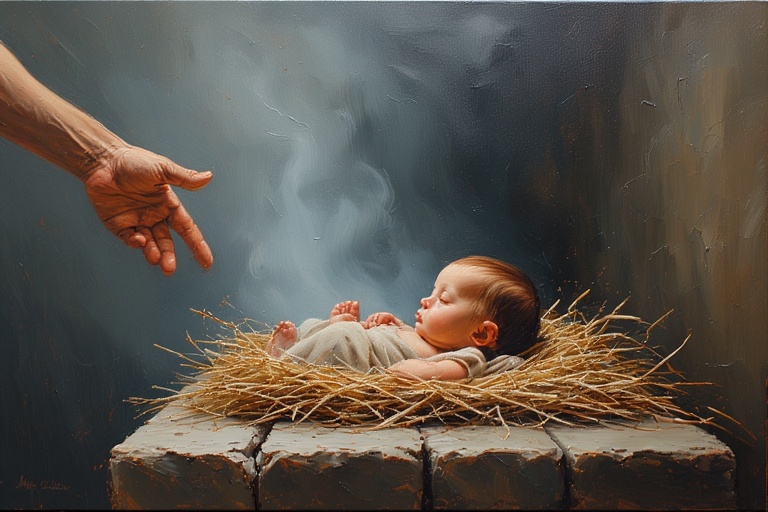
The time is still fulfilled, His kingdom is still at hand and His call still echoes across the years, cutting through the tinsel and the noise with clarion grace. He invites us, this Christmas and every day, to actively turn from every shadowed corner of our lives and to actively trust in the glorious light of His finished work. In doing so, we step out of the old, weary story of Eden’s loss and into the new, everlasting story that began in a stable, the only story that ends with a feast in a kingdom where every tear is wiped away, and where the Bread of Life satisfies for ever.
Fēlīcem Nātīvitātem Dominī

0 Comments