Up in the lofty heights of Pauline theology, specifically within the opening greeting of the Epistle to Titus, we encounter a sort of temporal paradox that challenges the very boundaries of human linguistics and comprehension. Paul speaks of a “hope of eternal life, which God, who never lies, promised before the ages began” (Titus 1:2 ESV). This is not merely a rhetorical flourish regarding ancient history; rather, it is a profound ontological statement concerning the “outside-of-time-ness” of the Divine. To contemplate a promise made pro chronōn aiōniōn (before the ages of time) is to recognise that the economy of salvation was never a reactive contingency, a “Plan B” scrawled in the margins of a fallen creation, but was the singular, primordial decree of the Godhead.
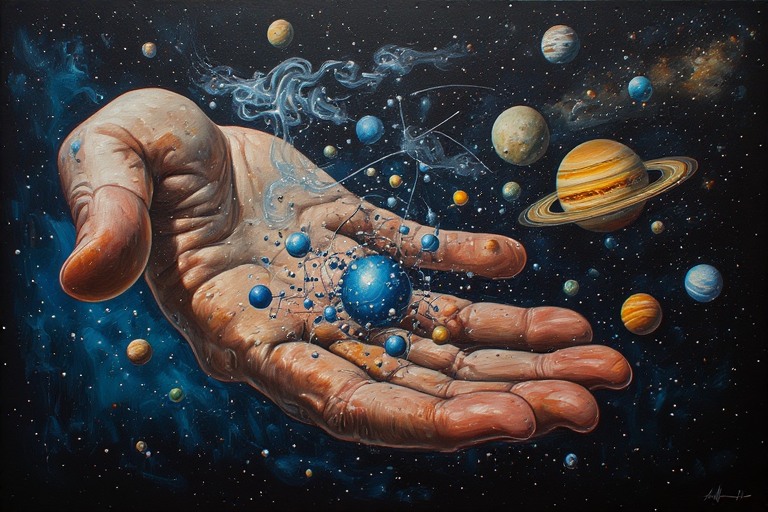
The logical necessity of this position is found in the doctrine of God as Creator ex nihilo. If God is the architect of all that is, He must, by definition, be the author of the spatiotemporal manifold itself. As Augustine famously wrestled with in Book XI of his Confessions, God does not precede time by a period of time, for there was no “then” when there was no time; rather, He precedes all created things by the sublime priority of an immutable eternity. Before the first fluctuations of a quark or the instantiation of quantum mechanics, there existed only the “eternal now” of the Holy Trinity. In this pre-temporal state – what we might tentatively describe as the “uncreated light of the Divine Intellect” – the Lamb was already slain, and the names of the elect were already known, the end of time was known outside of the instantiation of that time, the dimensions that yet were not created, already were.
The immutable decree
The comfort for the believer in this is rooted in metaphysical stability. Let me explain…because God is the creator of time, He is not subject to time, to its erosions, it’s effect on the material of a tendency toward entropy, nor its unpredictability; He is the “Father of lights, with whom there is no variation or shadow due to change” (James 1:17 ESV). When we read in Ephesians 1:4 that He “chose us in Him before the foundation of the world,” we are confronted with a grace that is older than the universe, that creation, than time itself indeed, before the worlds began there was grace (HT Mike Rayson!). This provides a rigorous logical foundation for the veracity of His promises: a God who exists beyond the sequence of cause and effect cannot be surprised by the created human and our frailty, nor can He “lie,” for His Word is the very substance of reality.
Our being “knit together in our mother’s womb” (Psalm 139:13) was not the commencement of His interest in us, but the temporal manifestation of an eternal intention.
A liturgical echo across the BCP
This high-view of God’s eternal, unchanging purpose is woven into the very fabric of our Anglican liturgy. In the Book of Common Prayer, specifically within the Articles of Religion (Article XVII: Of Predestination and Election), the Church speaks of this “outside-of-time-ness” with a rigorous, almost Augustinian precision:
“Predestination to Life is the everlasting purpose of God, whereby (before the foundations of the world were laid) he hath constantly decreed by his counsel secret to us, to deliver from curse and damnation those whom he hath chosen in Christ out of mankind…”
Furthermore, in the Collect for the Second Sunday in Advent, we pray that we may “embrace, and ever hold fast, the blessed hope of everlasting life, which thou hast given us in our Saviour Jesus Christ.” This “holding fast” is only possible because the hope itself is anchored in the aseity (that is the concept of self-existence or being self-derived, of having no outside source or dependence) of God – His self-existence and immutability. Because He is the author of the laws of physics, He is not bound by them; because He is the creator of the muon and the atom, He remains the Sovereign over their every fluctuation and indeed they (as are we) are held in existence simply by the power of His Word..
“If there is one single molecule in this universe running around loose, totally free of God’s sovereignty, then we have no guarantee that a single promise of God will ever be fulfilled.”
R.C Sproul
Reframing the temporal gift
To understand our place within this cosmic architecture, we might do well re-evaluate the nature of our daily chronology. Time itself is a benevolent concession from the Creator, a structured environment in which finite creatures may experience the unfolding of a love that is, in itself, infinite. We might articulate it thus:
“Time serves as a foundational gift of the Divine, a theatre of learning and growth wherein we inhabit planes of existence ordered by succession, yet remain ontologically tethered to a promise of life that transcends the horizons of the temporal. This chronological journey, while marking our daily progress, functions as a conduit for divine encounter, offering the seemingly perpetual opportunity to mature in our understanding of His attributes – His aseity, His immutability, His holiness, and His impossible love. Even as we exist in the state of “simul iustus et peccator”, we are sustained by a salvific decree that predates our sin, our first breathe and the cosmos itself, a grace that was never a divine afterthought but the very cornerstone upon which the foundation of the world was laid.”
Now, for the Anglican, this perspective illuminates the sacramental life as the intersection where the “before the ages” promise meets the “here and now” of the bread and wine. We do not worship a God who is making it up as He goes along, but one whose heart was set upon our redemption before the first atom was ever summoned into being.
The anchor in the storm
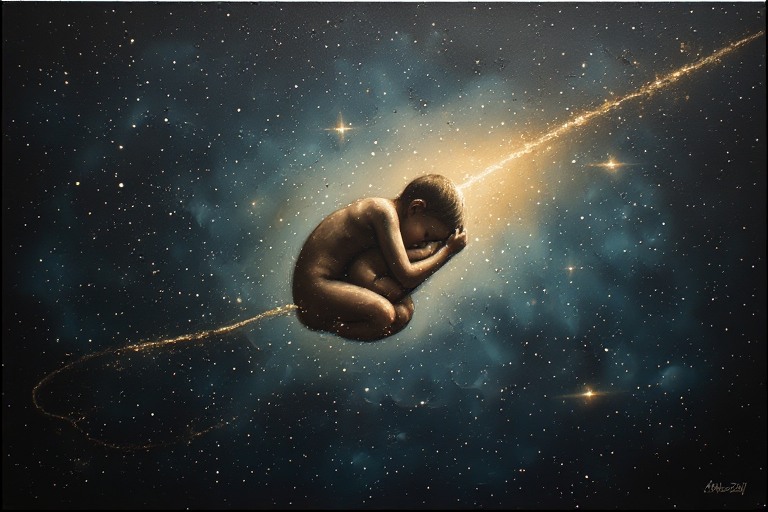
For the weary soul navigating the turbulent waters of this life, there is a profound, almost scandalous comfort to be had in and outside of this reality. We live our lives in the “now,” frequently bruised by the “before” and often anxious about the “next,” yet we are held by a grip that has never known the pressure of time. It is a staggering thought that before the first light broke across the void, before the intricacies of our own DNA were woven together in the quiet sanctuary of a mother’s womb we were already an object of the divine affection.
Me, you, any of us are not a cosmic accident, nor is our redemption a patchwork repair. We were chosen and loved before the foundations of the world were laid by a God who, by His very nature, cannot change and cannot lie. When the world feels precarious and the sands of time seem to be shifting beneath our feet, remember that our hope is anchored in the “eternal now” of God. The Cross was always the plan, and we were always invited to the feast. In the midst of our daily struggles, let us take heart: the grace that saves us today is the same grace that was promised before the stars ever radiated their first light.
0 Comments