A response to the encyclical “Magnifica Humanitas”
I usually spend my mornings troubleshooting cloud-based document management solutions, navigating AI implementations for clients or wondering why my smart fridge has decided to stage a silent protest against my choice of cold drink, so finding a lengthy papal encyclical on Artificial Intelligence in my inbox was a bit like receiving a system update for my soul.
It is rare that the Vatican pauses my typical workflow of emails and software proposals, but Pope Leo XIV’s Magnifica Humanitas demands a serious reassessment of the very foundations of the tech world I inhabit every day. He presents a challenge that resonates deeply with those of us who work with, build or manage these systems, asking whether we are currently constructing a new Tower of Babel based on our own pride or if we are willing to join the patient, piece by piece rebuilding of a city where God and humanity dwell together in harmony.
Central to this reflection is the concept of the technocratic paradigm, a term the Pope uses to describe a pervasive and dangerous mindset that has begun to dictate the terms of our modern existence by letting the logic of efficiency, control, and profit alone shape every personal, social, and economic decision. In the techonology sector, it is all too easy to fall into the trap of viewing the world as a series of datasets or workflows to be optimised, yet the Pope warns that when technology becomes the sole standard by which everything is judged, it begins to dictate what matters and what can be discarded, ultimately reducing the human person to a mere cog in a system driven toward ever greater output. This paradigm is particularly insidious because it masks its ideological biases under a veneer of neutrality, leading us to believe that our tools are objective when, in reality, they embody the priorities and prejudices of those who design and finance them.
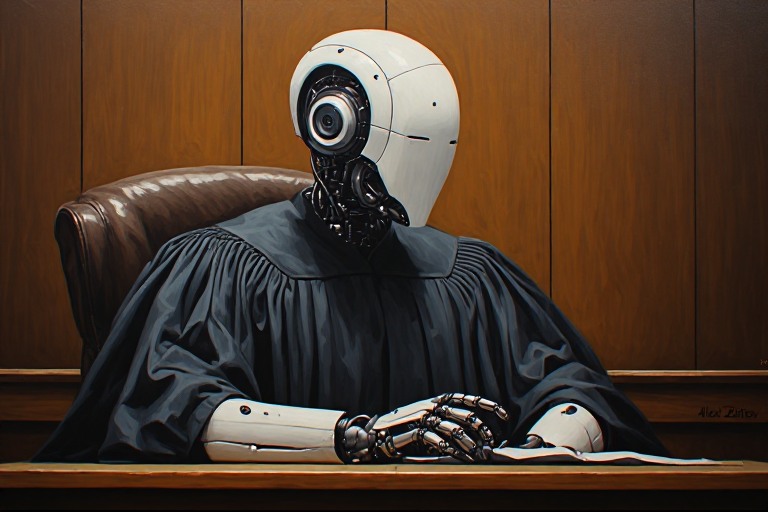
As a Anglican, I find a striking harmony between this call and our own theological emphasis on the Imago Dei, for if we are created in the image and likeness of God according to Genesis 1:26-27, then our value is a gift that precedes any technological upgrade or measure of productivity. The encyclical suggests that true progress is not measured by the power of our tools but by the care we offer to one another, particularly the vulnerable who are often silenced or excluded by the cold calculation of automated systems. While a machine may boost productivity, it can never replicate the human heart that gives itself through labour or the relational bonds formed in a shared task, and we must be vigilant against systems that de-skill the worker or subject them to automated surveillance simply to satisfy the rationale of profit.
Perhaps the most sobering challenge lies in the development of autonomous weapon systems that risk making lethal decisions without self-aware human control, a move the encyclical firmly rejects because we cannot delegate the irreversible judgment of life and death to automated systems that lack a moral conscience. No algorithm can ever understand the weight of mercy or the possibility of forgiveness, and when we reduce the enemy to a mere statistic on a screen, we allow the value of the human person to wither under the weight of cold calculation. This is an urgent moral concern for every believer, as the industry of conflict must never be allowed to overshadow the craft of peace or the responsibility we hold for protecting defenceless populations from the impersonal gaze of a machine.

To help navigate this transition, here are my five key takeaways that can help guide discernment as we seek to remain human in the age of AI:
1. The protection of our inherent human dignity
The document distinguishes between the “social dignity” we earn through our efforts and the inherent ontological dignity we possess simply by virtue of being willed into existence and loved by God. This means that no person should ever be reduced to mere data points or performance metrics, and we must resist any ideology that suggests a person must justify their worth through their efficiency or effectiveness because our value is a gift from our Creator.
2. The non-neutrality of AI and the need for governance
Technology is never neutral because it reflects the characteristics and biases of those who devise and regulate it, meaning that AI systems often reinforce the stereotypes or ideological leanings of their developers. It is therefore essential that we establish robust legal frameworks and independent oversight to ensure that these tools serve the common good rather than just the interests of a select few powerful transnational parties.
3. The primacy of human work over efficiency
Work is a fundamental key to the social question because it allows us to bring our freedom and creativity into play, contributing to the progress of society and the support of our families. We must be vigilant against technology systems that de-skill workers or relegate them to non-creative or repetitive tasks, ensuring that innovation supports the dignity and agency of the worker rather than replacing them to maximise short-term financial gains.
4. Rejection of autonomous weapon systems
The Pope is firm in stating that lethal decisions must never be delegated to algorithms, as machines lack a moral conscience and cannot understand the concepts of compassion or mercy. Entrusting the judgment of life and death to automated systems represents a dangerous normalisation of war that removes human responsibility from the most irreversible of actions and treats victims as mere data points.
5. Cultivating a “Civilisation of Love” through solidarity
I love this phrase “Civilisation of love”. True progress requires us to move from an imposed interdependence to a willed solidarity that views the digital environment as a new dimension of our common home where everyone can flourish. This involves disarming AI by freeing it from the mentality of armed geopolitical competition and opening it to a plurality of human cultures, ensuring that technological development always fosters justice and the integral development of every person.
Despite these sobering warnings, the message is ultimately one of immense hope because we are not passive spectators of a predetermined fate but active builders invited to participate in the divine act of creation. We can take heart in the promise of the New Jerusalem, that holy city which John saw coming down out of heaven from God in Revelation 21:2, knowing that our faithful efforts to build for the common good in the present are preparing the way for a future where nothing authentically human will ever be lost.
By grounding our innovation in love and justice, we ensure that the human heart remains the true centre of our history, and that the machines we build always remain our servants rather than our masters.
PS – Always say “thank you” to your smart AI assistant, just to be safe.
0 Comments